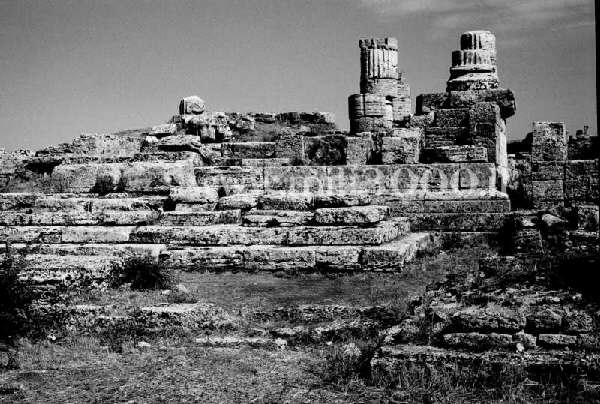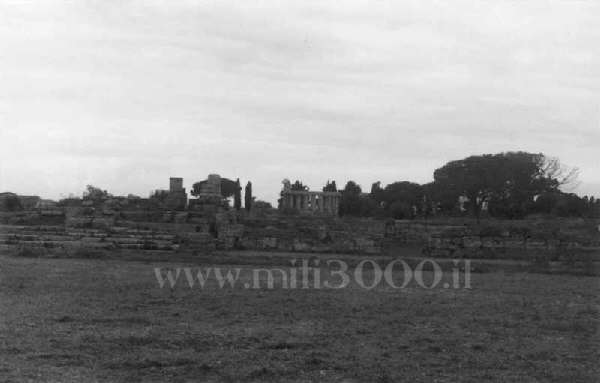
Paestum, l'antica Poseidonia, città della Campania presso il golfo di Salerno, era uno dei principali centri della Magna Grecia Fondata dai Sibari nel 600 a.C. circa. Alla fine del V secolo a.C. Paestum fu conquistata dai lucani, sotto i quali visse un periodo di prosperità e raggiunse la massima espansione territoriale; nel 273 a.C. i romani vi stabilirono una propria colonia, cambiando il nome della città con quello attuale. In età imperiale Paestum iniziò una lunga e progressiva decadenza, fino all'abbandono, che avvenne nell'VIII secolo, per l'impaludamento della zona, il colpo di grazia venne inferto dai Saraceni che nel IX sec. d.C. la distrussero definitivamente.
Fu attivissimo centro commerciale. Nota per i magnifici templi classici che ancora si conservano e per le mura quasi intatte, lunghe 4 km, con 4 porte:
Porta Sirena, Porta Aurea, Porta di Mare, Porta della Giustizia.
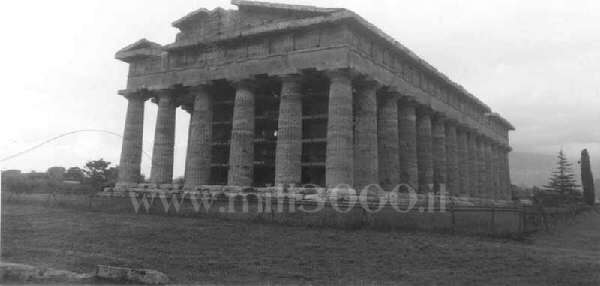
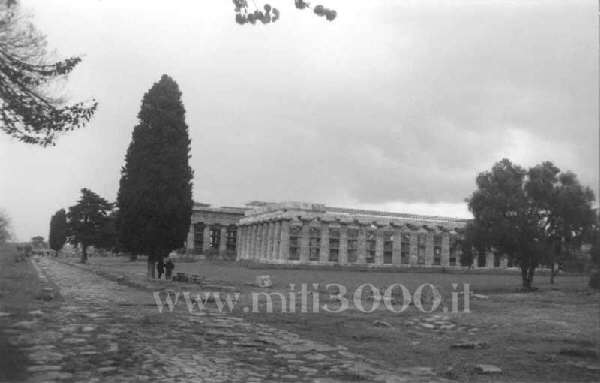
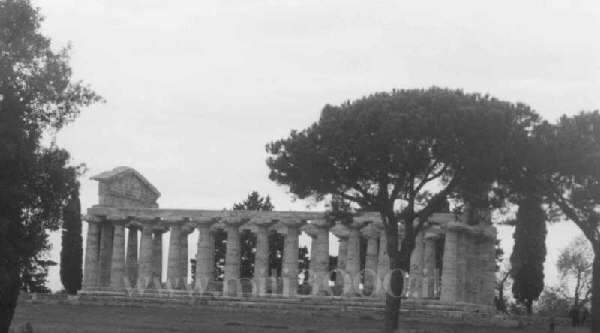
Il Poseidonion, il tempio dorico di Nettuno, è uno dei più bei templi classici giunti sino a noi. Altri mirabili monumenti:
la Basilica, il Tempio di Cerere, il Tempio della Pace, l'Anfiteatro, il Teatro, il Foro Italico e l'Heraion di Sele, antichissimo santuario dedicato ad Hera Argiva. Questo tempio che si costituiva di diversi edifici si ergeva a Nord di Paestum. Scomparso alla fine del IV secolo d.C. fra i suoi reperti più importanti di arte greca arcaica troviamo: 37 metope, del 570 a.C., che raffigurano in rilievo le imprese di Eracle e molti miti del ciclo troiano; 12 metope, del 510-500 a.C., appartenevano al tempio di Hera e raffigurano una danza di fanciulle.
Paestum dispone di un bellissimo e moderno Museo fondato nel 1952 nei pressi dell'antica città, vi sono conservati reperti datati dal VII secolo a.C. al VII secolo d.C.. L'area archeologica della città è stata inclusa dall’UNESCO nell’elenco dei siti da salvaguardare come patrimonio dell’umanità. Guardala con Google
maps
Paestum, ancient Poseidonia, a city in Campania near the Gulf of Salerno, was one of the main centers of Magna Graecia. Founded by the Sybaris around 600 BC, Paestum was conquered by the Lucanians at the end of the 5th century BC, under whom it enjoyed a period of prosperity and reached its maximum territorial expansion. In 273 BC, the Romans established a colony there, changing the city's name to its current one. During the Imperial era, Paestum began a long and progressive decline, until it was abandoned in the 8th century due to the area becoming marshy. The final blow was dealt by the Saracens, who definitively destroyed it in the 9th century AD.
It was a very active commercial center. Known for its magnificent classical temples that still survive, and for its nearly intact 4 km long walls, with 4 gates:
Porta Sirena, Porta Aurea, Porta di Mare, and Porta della Giustizia.
The Poseidonion, the Doric temple of Neptune, is one of the most beautiful classical temples that has survived to this day. Other wonderful monuments include:
the Basilica, the Temple of Ceres, the Temple of Peace, the Amphitheater, the Theater, the Foro Italico, and the Heraion of Sele, an ancient sanctuary dedicated to Argive Hera. This temple, which consisted of several buildings, stood north of Paestum. It disappeared at the end of the 4th century AD. Among its most important finds of archaic Greek art are: 37 metopes, dating from 570 BC, which depict in relief the exploits of Heracles and many myths of the Trojan cycle; 12 metopes, dating back to 510-500 BC, belonged to the temple of Hera and depict dancing girls.
Paestum has a beautiful and modern museum founded in 1952 near the ancient city, which houses finds dating from the 7th century BC to the 7th century AD. The archaeological area of the city has been included by UNESCO in the list of sites to be safeguarded as a World Heritage Site. Watch it with Google
maps