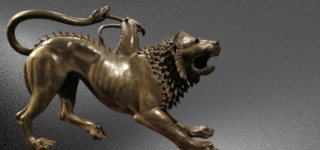
Il Teatro Greco visto da Tino Insolia
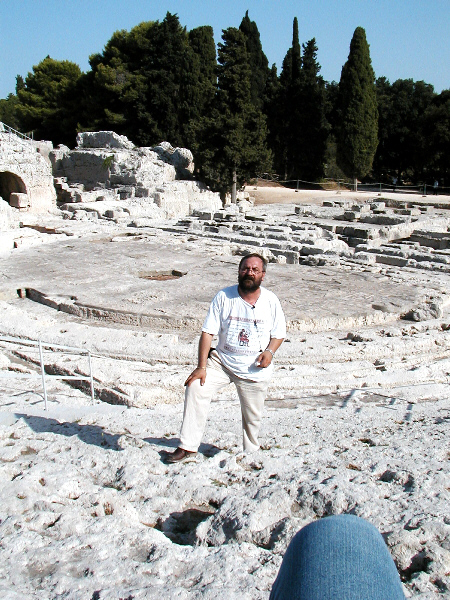
Il profilo della parte terminale ed orientale degli Iblei, che approdano a Siracusa, si staglia con i suoi piani orizzontali di sedimenti marini e ci segue, quasi ad indicarci il luogo che andremo a visitare. Le cime ritagliano spicchi di cielo privi di nuvole. Le vedi come compagne fedeli in un paesaggio immutabile da millenni lungo la statale 124, nel tratto che conduce da Palazzolo Acreide a Siracusa. Superato l'abitato di Floridia e il ponte sull'Anapo, in prossimità dell'autostrada, poco prima di entrare a Siracusa una grande macchia verde a sinistra, fiancheggiata da piccole croci, attira la nostra attenzione. Essa mostra nella luminosità del giorno il cimitero dei soldati inglesi, sbarcati nel luglio 1943 sulle spiagge a sud di Siracusa, uccisi insieme ai loro verdi anni.
Appena imboccata la sopraelevata Via Paolo Orsi, dal nome del grande studioso e archeologo siracusano del Novecento, il sito archeologico di Siracusa ti abbaglia con la massa maestosa e imponente del Teatro Greco. Ma lo scrigno contiene altri gioielli che sarà intrigante scoprire.
Arrivati all'ingresso del sito archeologico, spiace notare la difficoltà di posteggiare la propria vettura. Sembra una vera e propria fatica di Ercole. Un mucchio di chioschi, inoltre, con i soliti gadget di dubbio gusto e di caro prezzo, è stato per fortuna recentemente rimosso per dare respiro e decoro a tutto l'insieme. Gli orari per le visite, inoltre, non sono tra i migliori (altra fatica di Ercole) e sottopongono i turisti a veri e propri bagni di sudore che solo la bellezza del luogo può far tollerare.
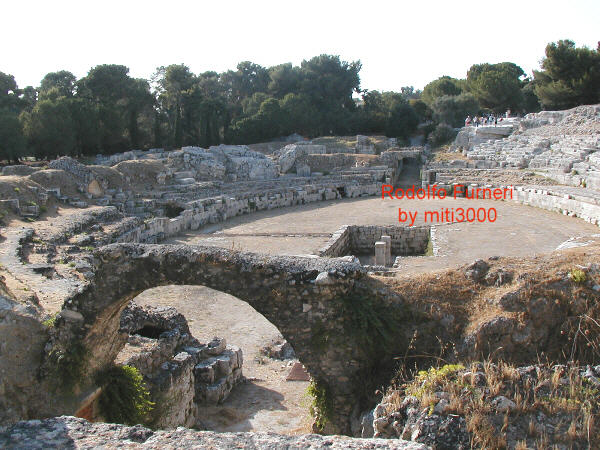
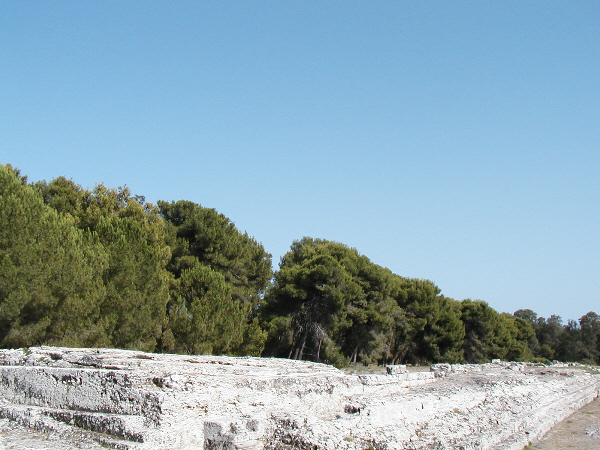
Bisogna resistere subito alla tentazione di visitare l'anfiteatro romano, che si presenta ben conservato e di buona fattura. La sua visita può essere riservata alla fine, trattandosi di un monumento di epoca romana, staccato quindi dal contesto greco. Scendendo verso l'ingresso non possiamo fare a meno di fermarci sul lato sinistro, per ammirare la perfezione dell'Ara di Ierone II (265-215 a.C.), un altare dalle enormi dimensioni ( m 22,80 x 198 ), fatta costruire dall'omonimo tiranno nel III secolo a.C. per la celebrazione dei propri trionfi, attraverso l'acclamazione e sacrifici d'animali, tesi ad ottenere la benevolenza degli Dei. I fianchi dell'Ara, costituiti da grandi parallelepipedi di roccia, giustapposti si restringono e conducono, alla sommità, ad un rettangolo molto stretto e lungo, una piattaforma dalla quale una folla osannante lanciava fiori e tributava gli onori all'uomo che reggeva le sorti della città.
Percorsi altri cinquanta metri si entra finalmente in uno dei complessi archeologici più grandi e suggestivi di tutto il mondo greco. Un'ultima macchia scura, dovuta alla presenza di numerose piante di ulivo a sinistra, invita il visitatore a percorrere il sentiero scavato nella viva roccia.
Dopo pochi passi lo spettacolo che si presenta ai nostri occhi, pur conosciuto per averlo visitato altre volte, ci lascia senza parole. Ammutoliti, facciamo fatica a valutare le dimensioni di questo Teatro con i piani di fuga dei suoi gradini che rendono ancora più imponente la maestosità del luogo. Ogni volta è un'emozione nuova, un fascino che si perpetua.
Fu fatto scavare, risistemando un vecchio impianto del V secolo, da Ierone II quasi per intero nel meraviglioso calcare ad alghe del colle Temenite, così chiamato per la presenza di un recinto sacro (dal greco "temenos" ) di un santuario dedicato al dio Apollo. Possiede gradini poco più che semicircolari, frutto di studi tesi ad ottenere una migliore acustica.
Ha il diametro di 138 m e la cavea, riservata agli spettatori, è divisa in 9 settori, detti cunei. Dei 61 ordini di gradini originari ne rimangono 46. Lungo il largo ambulacro centrale sono incisi ed ancora leggibili i nomi di divinità e dei parenti di Ierone II, ai quali furono intitolati i singoli cunei della cavea.
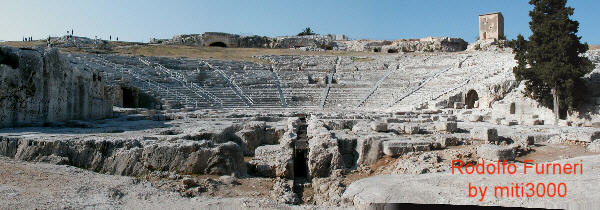
Il luogo è un incanto. Esposto a sud, è aperto verso ovest dove la valle dell'Anapo, che nasce dai margini orientali degli Iblei, s'incontra con il mare. Percorrendo l'ampio ambulacro centrale, sovrastati a destra dalla massa dei gradini superiori incombenti e quelli inferiori che si restringono sempre più in un gioco di anelli semicircolari, si è indotti a scendere verso la zona del coro e dell'orchestra che biancheggia sotto un sole pomeridiano caldo e tinto dei colori del grano al momento d'essere mietuto.
Dal basso ammiriamo la straordinaria e perfetta distribuzione delle file dei gradini, tagliate trasversalmente da grosse linee di separazione, che altro non erano che corridoi, utili per gli spostamenti degli spettatori.
Già, il pubblico!
Ma quante persone poteva contenere? Assodato che alcuni gradini superiori dalla data della costruzione ad oggi (circa venticinque secoli) sono crollati, le stime vanno da quindicimila a ventimila spettatori. Un'ottima e accurata acustica dava a tutti la possibilità di seguire le tragedie e le commedie che venivano rappresentate. Seduti sui gradini, guardando le loro linee fuggenti come ali di un grande uccello, sembra di sentire i cori, le musiche, e gli attori che si muovevano sulla scena, sospinti dalla forza e dalla grande carica emotiva dei testi di Pindaro, Sofocle, Eschilo, Euripide ed Epicarmo; solo per citare i più noti.
Questi testi, pur tradotti, sono lo specchio fedele della società e della civiltà greca. I valori e i principi in essi contenuti, da decine di secoli sono patrimonio dell'Umanità da cui il mondo occidentale ha attinto per sviluppare un modello di vita, di rappresentatività e partecipazione (elementi fondamentali di una democrazia) che non ha avuto eguali nel mondo. Il mondo orientale ha invece seguito un'altra via e cioè quella dell'annullamento individuale in un grande movimento di pensiero e di fede che, spesso, ha determinato nelle sue frange più estremiste una ideologizzazione e un atteggiamento di fanatismo integralista che non ha quasi mai concesso spazio al dialogo e alla comprensione.
Siracusa, capitale della magna Grecia, dove le arti fiorivano incoraggiate da tiranni illuminati, con la potenza economica e politica raggiunta poté benissimo rivaleggiare con Atene e le altre grandi città greche. I tentativi di Atene di abbatterne la potenza si dimostrarono inutili e, soprattutto, nella seconda guerra del Peloponneso i Siracusani annientarono la flotta e l'esercito ateniese, forte di quarantamila uomini, che per mare e per terra avevano circondato la città.
Ripercorrendo e raggiungendo la fine dell'ambulacro si costeggiano i gradini superiori, su un'erta salita all'apice della quale uno stretto pianoro mostra tutta la bellezza del luogo poco visibile dal basso.
Dalle pareti di una grotta centrale, profonda tre o quattro metri, oltre cinquecento litri d'acqua al secondo fuoriescono impetuosi, costituendo una suggestiva e bella cascata che rumoreggiando riempie la vasca antistante. Dal basso muretto che limita la vasca tutti i visitatori bagnando il viso e le mani trovano quel refrigerio che solo l'acqua riesce a dare. Questa presenza sembra un miraggio.
In effetti, non si tratta di una trovata scenografica, bensì del termine dell'antico acquedotto di Siracusa. Fatto costruire nel V secolo a.C. dal tiranno Gelone, che utilizzò come schiavi i Cartaginesi, vinti nella battaglia di Imera del 480 a.C., esso rappresenta ancora una realizzazione dalle soluzioni geniali.
Si tratta di un'opera di alta ingegneria idraulica greca che dopo venticinque secoli è ancora in funzione, servendo l'acquedotto di Siracusa e l'irrigazione dei campi attraversati.
Captando l'acqua lungo il corso dell'Anapo, dopo un percorso di circa venticinque chilometri, attraversando gallerie scavate alla perfezione, per sola caduta si riforniva così la città del prezioso liquido. Risistemato una prima volta nel 1576 dal sortinese Pietro Gaetani e poi ancora nell'ottocento, è noto con il nome di "Saia Lemmi", cioè Canale Galermi.
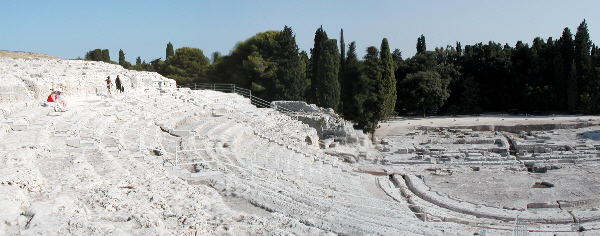
Siamo alla sommità del teatro e da questa posizione ammiriamo lo stesso spettacolo, tranne le brutture edilizie moderne, degli spettatori di allora. Lo sguardo abbraccia tutto il porto grande, dove nel chiuso di acque sicure dondolavano le triremi da guerra, insieme alle navi mercantili che con i loro frequenti viaggi, traversando il mare Ionio, rifornivano di olio e vino la Grecia, riportando in Sicilia ceramiche e altri prodotti. Le coste e il mare prospicienti sono stati testimoni di naufragi che hanno arricchito di tesori i fondali. Lo sguardo si spinge oltre e tocca la sponda opposta del porto, denominata "Isola", e poi giù verso la Fanusa e il Plemmirio.
Una pallida luna è comparsa su un cielo ancora troppo chiaro per farne risaltare la bellezza. Sembra una goccia di tenue luce, sospesa su un mare che si avvia a oscurarsi sempre di più con il trascorrere dei minuti. Spettatrice fedele che ogni notte si leva per assistere muta al trascorrere del tempo e allo svolgersi di eventi che hanno arricchito e reso unico quest'angolo di mondo.
Tino Insolia
The Greek Theater seen by Tino Insolia
The profile of the easternmost tip of the Iblei Mountains, which extend to Syracuse, looms large with its horizontal planes of marine sediment, following us, almost as if to indicate the place we are about to visit. The peaks carve out cloudless segments of sky. You see them as faithful companions in a landscape unchanged for millennia along State Road 124, in the stretch leading from Palazzolo Acreide to Syracuse. After passing the village of Floridia and the bridge over the Anapo, near the highway, just before entering Syracuse, a large green patch on the left, flanked by small crosses, catches our attention. In the daylight, it reveals the cemetery of the English soldiers who landed in July 1943 on the beaches south of Syracuse, killed along with their youthful years.
As soon as you enter the elevated Via Paolo Orsi, named after the great 20th-century Syracusan scholar and archaeologist, the archaeological site of Syracuse dazzles you with the majestic and imposing mass of the Greek Theater. But the treasure trove contains other jewels that will be intriguing to discover.
Upon reaching the entrance to the archaeological site, it's disappointing to note the difficulty of parking your car. It seems like a true Herculean task. A slew of kiosks, selling the usual tasteless and expensive gadgets, were fortunately recently removed to give the whole site a more airy and decorous feel. Furthermore, the visiting hours are not the best (another Herculean task), subjecting tourists to veritable sweat baths that only the beauty of the place can tolerate.
You should immediately resist the temptation to visit the Roman amphitheater, which is well-preserved and well-crafted. Its visit can be saved for the end, as it is a Roman monument, detached from its Greek context. Descending toward the entrance, we cannot help but pause on the left side to admire the perfection of the Altar of Hiero II (265-215 BC), an altar of enormous dimensions (22.80 x 198 m), built by the tyrant of the same name in the 3rd century BC to celebrate his triumphs, through acclamation and animal sacrifices, aimed at gaining the benevolence of the gods. The sides of the Altar, made up of large juxtaposed rock parallelepipeds, narrow and lead, at the top, to a very narrow and long rectangle, a platform from which a cheering crowd threw flowers and paid tribute to the man who ruled the city.
After another fifty meters, we finally enter one of the largest and most evocative archaeological complexes in the entire Greek world. A final dark spot, caused by the presence of numerous olive trees on the left, invites the visitor to follow the path carved into the living rock.
After a few steps, the spectacle before our eyes, even though we know it from previous visits, leaves us speechless. Stunned, we struggle to appreciate the size of this theater, with the vanishing planes of its steps making the majesty of the place even more imposing. Each visit is a new emotion, a fascination that endures.
It was excavated by Hiero II, renovating an older 5th-century structure, almost entirely in the magnificent algae limestone of the Temenite Hill, so named for the presence of a sacred enclosure (from the Greek "temenos") of a sanctuary dedicated to the god Apollo. Its steps are slightly more than semicircular, the result of studies aimed at improving acoustics.
It has a diameter of 138 meters, and the cavea, reserved for spectators, is divided into nine sectors, called cunei. Of the 61 original tiers of steps, 46 remain. Along the large central ambulatory, the names of deities and relatives of Hiero II, to whom the individual cunei of the cavea were dedicated, are engraved and still legible.
The place is enchanting. Facing south, it opens to the west, where the Anapo Valley, which rises from the eastern edge of the Hyblaean Mountains, meets the sea. Walking along the wide central ambulatory, overlooked on the right by the mass of overhanging upper steps and the ever-narrowing lower ones in a pattern of semicircular rings, one is drawn to descend toward the choir and orchestra area, which gleams white under a warm afternoon sun, tinged with the colors of harvested wheat.
From below, we admire the extraordinary and perfect distribution of the rows of steps, cut transversely by large dividing lines, which were nothing more than corridors, useful for the movement of spectators.
Yes, the audience!
But how many people could it hold? Given that some of the upper steps have collapsed since its construction (about twenty-five centuries ago), estimates range from fifteen to twenty thousand spectators. Excellent and accurate acoustics allowed everyone to follow the tragedies and comedies being performed. Sitting on the steps, gazing at their fleeting lines like the wings of a great bird, one seems to hear the choruses, the music, and the actors moving across the stage, driven by the power and great emotional charge of the texts of Pindar, Sophocles, Aeschylus, Euripides, and Epicharmus; to name just the most famous.
These texts, although translated, are a faithful reflection of Greek society and civilization. The values and principles contained within them have been a human heritage for decades, drawing upon which the Western world has developed a model of life, representation, and participation (fundamental elements of democracy) unmatched anywhere in the world. The Eastern world, however, has followed a different path: that of individual annihilation in a great movement of thought and faith that has often led, in its most extremist fringes, to an ideologization and attitude of fundamentalist fanaticism that has almost never allowed room for dialogue and understanding.
Syracuse, the capital of Magna Graecia, where the arts flourished, encouraged by enlightened tyrants, with its economic and political power, was easily able to rival Athens and the other great Greek cities. Athens' attempts to overthrow its power proved futile, and, most importantly, in the Second Peloponnesian War, the Syracusans annihilated the Athenian fleet and army, forty thousand strong, which had surrounded the city by land and sea.
Retracing the steps and reaching the end of the ambulatory, you skirt the upper steps, on a steep climb at the top of which a narrow plateau reveals the full beauty of the place, barely visible from below.
From the walls of a central cave, three or four meters deep, over five hundred liters of water per second gush forth, forming a striking and beautiful waterfall that roars and fills the pool in front. From the low wall that borders the pool, all visitors, wetting their faces and hands, find the refreshment that only water can provide. This presence seems like a mirage.
In fact, this isn't just a theatrical gimmick, but rather the terminus of the ancient aqueduct of Syracuse. Built in the 5th century BC by the tyrant Gelon, who used the Carthaginians, defeated in the Battle of Himera in 480 BC, as slaves, it still represents a feat of ingenious solutions.
It is a work of high-level Greek hydraulic engineering that, twenty-five centuries later, is still in operation, serving the Syracuse aqueduct and irrigating the fields it passes through.
Capturing water along the Anapo River, after a journey of about twenty-five kilometers, through perfectly excavated tunnels, it was thus supplied by gravity alone with the precious liquid. Restored for the first time in 1576 by Pietro Gaetani of Sortino and again in the nineteenth century, it is known as the "Saia Lemmi," meaning Galermi Canal.
We are at the top of the theater, and from this position we admire the same spectacle, minus the modern architectural ugliness, as the spectators of that time. The view encompasses the entire large harbor, where war triremes once swung in the shelter of safe waters, along with the merchant ships whose frequent voyages across the Ionian Sea supplied Greece with oil and wine, bringing ceramics and other products back to Sicily. The coastline and the sea facing it have witnessed shipwrecks that have enriched the seabed with treasures. The gaze extends beyond, touching the opposite shore of the harbor, known as "Isola," and then down toward Fanusa and Plemmirio.
A pale moon has appeared in a sky still too bright to bring out its beauty. It seems like a drop of faint light, suspended over a sea that grows darker with each passing minute. A faithful spectator who rises each night to silently witness the passage of time and the unfolding of events that have enriched and made this corner of the world unique.
Tino Insolia