A cura di Giorgio Manusakis
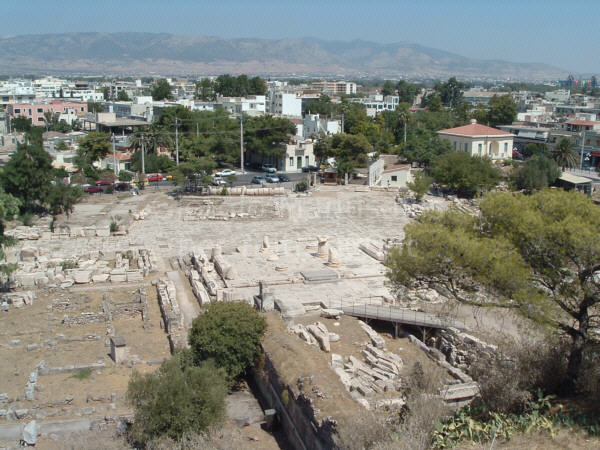
Ελευσισ, Eleusi è una cittadina a circa venti chilometri da Atene, sede del sito archeologico comprendente il santuario di Demetra e Kore, ove anticamente venivano celebrati i famosi Misteri Eleusini (guardala con Google maps). Il nome Eleusi sembra derivargli da un eroe di non chiara paternità, ma un'altra ipotesi sostiene che derivi da éleusis, in greco "venuta", facendo riferimento alla venuta di Demetra a Eleusi sotto sembianze mortali dopo il rapimento della figlia Kore. Inizialmente indipendente, nel VII sec.a.C. si alleò con Atene entrando a far parte dello stato Attico.
Fu un'importante centro religioso fino al 381 d.C., quando Teodosio ordinò la chiusura del santuario; in seguito fu distrutta dai barbari e venne abbandonata dalla popolazione nel 396 d.C.. Attualmente Eleusi è una cittadina moderna chiamata Elefsina e, oltre ad avere il bellissimo sito
archeologico, è anche un'importante centro industriale.
L'antico centro era situato tra il mare e la base di un colle ed era cinto di mura.
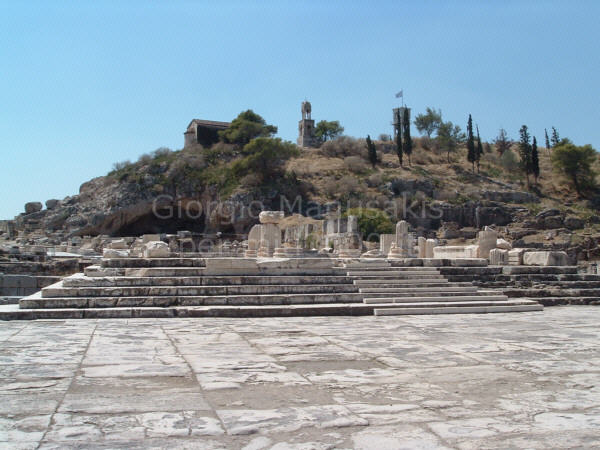
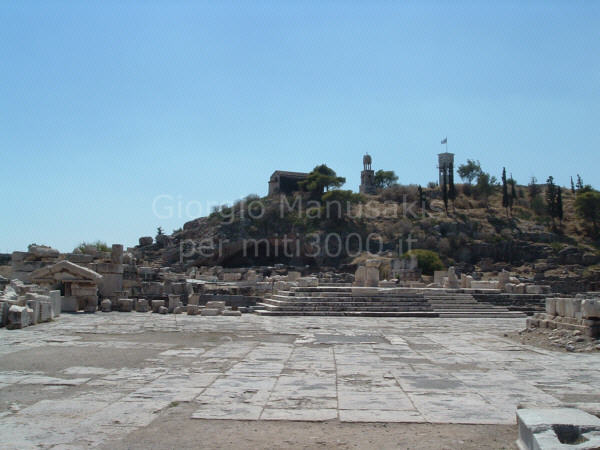
Il santuario di Demetra e Kore è situato ai piedi dell'acropoli ed è preceduto dai grandi propilei, esso fu oggetto di diversi restauri e ampliamenti da parte di Pisistrato, Cimone e Pericle, quest'ultimo diede la versione definitiva del tempio, a pianta quadrata, e fece aggiungere il grande salone, progettato da Ictino.
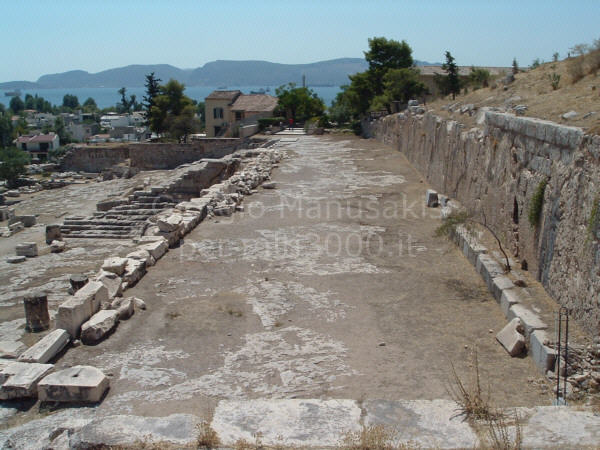
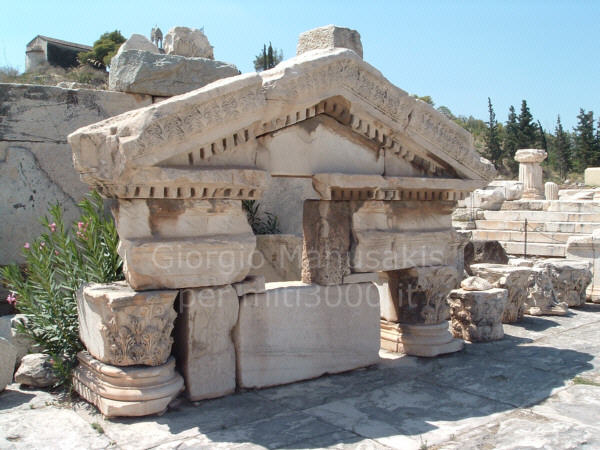
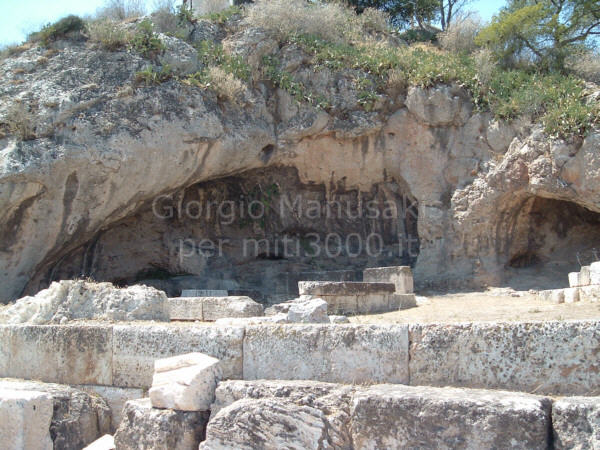
Successivamente furono aggiunti il portico dorico e, in epoca romana, i piccoli propilei, da cui iniziava la via sacra lungo cui si trova il Plutonion e una grotta che rappresentava l'ingresso dell'Ade.
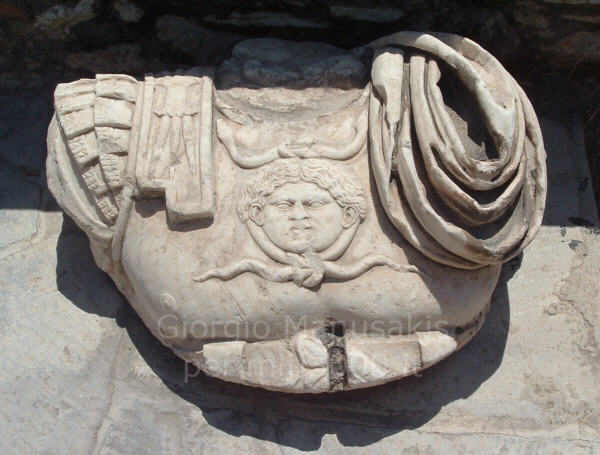
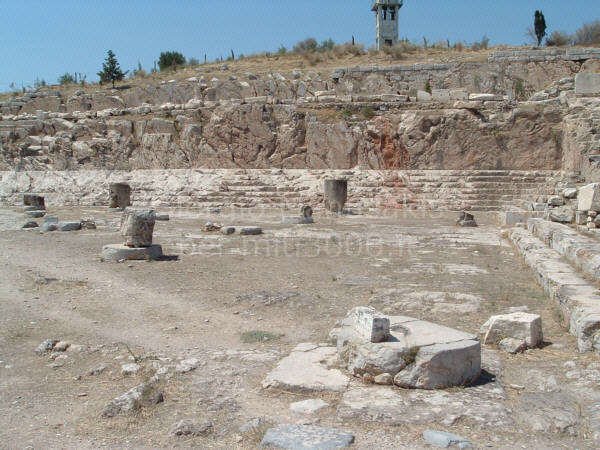
Il telesterion era il salone dove aveva luogo la cerimonia di iniziazione ed era costituito da otto navate con file di sei colonne; numerose opere d'arte lo decoravano, alcune, come un rilievo di Trittolemo, Demetra e Kore del V sec.a.C., si possono ammirare al Museo Archeologico Nazionale di Atene; altri numerosi rilievi e opere d'arte sono presenti nel piccolo museo presente nel sito archeologico.
Dei Misteri Eleusini si conoscono le funzioni, le processioni e le feste delle fasi preliminari, tutte cerimonie pubbliche, si sa, inoltre, che questo genere di celebrazioni non erano ben viste da tutti, tant'è che il celebre uomo politico ateniese Alcibiade fu accusato di aver partecipato, tra gli altri riti, anche ai Misteri Eleusini, ma di ciò che accadeva durante la vera e propria celebrazione, si hanno poche e incerte notizie.
Difatti ai riti che si celebravano nel Telesterion e che rappresentavano il cuore della cerimonia, potevano partecipare solo gli iniziati e a questi era imposto il più rigoroso segreto; considerato ciò che è stato svelato fino a oggi, non possiamo che complimentarci con loro per come hanno mantenuto il segreto!
Ma entriamo nella parte di nostra più stretta competenza: il mito.
Come abbiamo detto Eleusi è strettamente legata a Demetra e Persefone. Infatti, come ci narra l'inno omerico a Demetra, un bel giorno la sua bellissima figlia Persefone, per la sua giovinezza detta anche Kore, scherzava con le sue amiche per i prati, finché non vide un fiore che mai aveva visto; questo fiore, non a caso, era il narciso che, essendo una pianta a bulbo, passa parte dell'anno sottoterra, destino che avrebbe condiviso con la giovane Persefone; infatti nel momento stesso in cui la Kore colse il fiore, si aprì una voragine dalla quale emerse il dio Ade, che la caricò con forza sul suo carro dorato, trainato da due cavalli immortali e la portò nel suo regno.
(in proposito leggiamo un verso del II° Inno omerico:
mentre con le figlie di Oceano giocava,
fanciulle dal turgido seno, e fiori coglieva:
rose e croco e viole belle e giacinti
sul tenero prato; e il narciso che aveva,
a inganno della bella fanciulla, per voglia di Zeus,
prodotto la Terra indulgente a quel nume
che molti uomini ospita: lucido fiore
meraviglia per tutti a vedersi: così per gli dèi
immortali come per gli uomini effimeri:
cento corolle spuntavano dalla radice
e all'effluvio odoroso godevano il cielo
alto e tutta la terra e le onde marine.
Stupita le mani ella tese per cogliere
quel dolce ornamento: quand'ecco nell'ampia
campagna di Nisa la terra s'aperse e fuori
il signore che molti uomini ospita
ne uscì su cavalle immortali, il dio
dai molti nomi, figlio di Crono; e lei
riluttante rapì:
Per il dio degli inferi, infatti, non sarebbe stato facile convincere la nipote Persefone, di cui si era innamorato, a divenire regina del suo regno e, quindi, a trasferirsi nella sua non proprio simpatica dimora; quindi ideò lo stratagemma del rapimento con nozze riparatrici finali, un piano che poi fece scuola anche tra i mortali. Il capostipite di tutti i rapimenti, secondo la tradizione, ebbe luogo in Sicilia, più precisamente presso il lago di Pergusa, nei pressi di Enna, ma rapitore e rapita sarebbero poi entrati nel regno di Ade sprofondando vicino Siracusa in un luogo dove, da allora, sgorga la sorgente Ciane, la Oscura; gli abitati di Eleusi, invece, sostenevano che Ade fosse emerso nei pressi della loro cittadina e, a sostegno di questa ipotesi, vengono citati miti narrati dagli orfici, precedenti agli inni omerici, in cui si racconta che Demetra, nel cercare l'amata figlia, mentre percorreva il campo di Raro, tra Atene e Eleusi, si imbatté nel contadino Dysaules, la moglie Baubo e i loro figli Trittolemo, Eumolpo e Eubuleo; quest'ultimo era un porcaro e i suoi maiali furono inghiottiti nello stesso precipizio in cui sprofondarono Ade e Persefone e il fratello Trittolemo riferì la cosa a Demetra che lo ricompensò come vedremo più avanti; in merito a questa versione si deve ricordare che nelle celebrazioni dei Misteri Eleusini, gli aspiranti all'iniziazione eseguivano un rito presso la
spiaggia del Falero, che prevedeva di buttarsi a mare correndo e insieme a loro dovevano portare in mare un maialino che veniva poi sacrificato. L'inno omerico a Demetra, a sua volta, chiama il luogo del rapimento "la pianura di Nisa", che non è facilmente localizzabile in quanto molti luoghi vengono indicati con questo stesso nome.
Ma, tornando al rapimento della bella Kore, c'è da dire che Zeus, nella sua onnipotenza, non era proprio all'oscuro dei piani del fratello Ade, anzi, pare che fu proprio lui a darla in sposa al dio degli inferi!
Ora, cosa fa una madre a cui improvvisamente scompare una figlia? Piange e le cerca ovunque. Ed è esattamente ciò che fece Demetra la quale, essendo una dea, non si limitò certo a farlo come una madre normale, ma la cercò personalmente volando come un uccello in ogni angolo del mondo per ben nove giorni, ma senza alcun risultato. A questo punto intervenne Helios, l'onniveggente dio del Sole; a lui infatti Demetra si rivolse per sapere dove fosse e chi aveva rapito la sua amata figlia; ed Helios rispose rivelandole tutta la verità e additando Zeus come principale colpevole, cercando infine di convincerla che Ade non era, tutto sommato, un genero indegno, in quanto governava un terzo dell'universo.
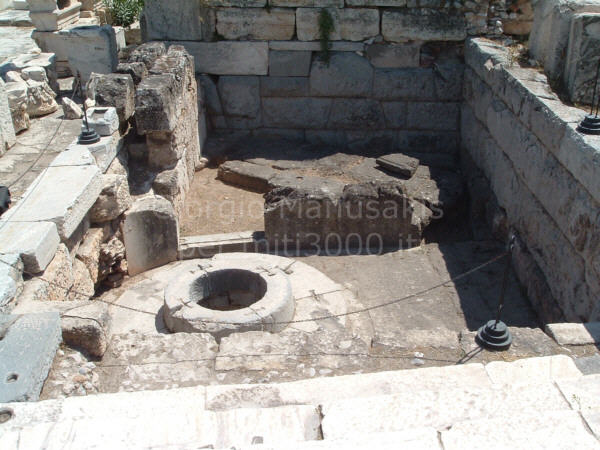
Ma quale mamma sarebbe felice di sapere la propria figlia nel regno dei morti, sia pure come regina? Anche Demetra, dunque, comprensibilmente non era affatto contenta, quindi scese sdegnata dall'Olimpo, assunse le sembianze di una innocua vecchietta e iniziò a girovagare tra i mortali, fino a giungere a Eleusi; qui si sedette, piangente, su una pietra accanto al pozzo delle Vergini o Callicoro, dove la videro le quattro figlie del re di Eleusi, Celeo che la invitarono ad andare in casa loro; lì Demetra rifiutò ciò che le venne offerto e si fece preparare una bevanda con orzo, acqua e menta fine, che fu poi chiamata ciceone, questa, con l'aggiunta di miele e formaggio caprino, fu usata dai greci come libagione sacra e dissetante energetico, mentre Nestore nell'Iliade ci fa aggiungere anche un po' di vino di Pramno. In casa del re c'era bisogno di una nutrice per il figlio appena nato, Demofonte, e tale compito fu affidato a Demetra. La dea si impegnò a fondo nel far crescere forte e robusto il bambino e ne avrebbe fatto persino un immortale se la regina, Metanira, non avesse spiato Demetra e l'avesse trovata mentre avvolgeva nel fuoco Demofonte, vedendo ciò Metanira iniziò ad urlare che l'anziana donna volesse ucciderle il figlio, adirando Demetra che riprese la sua forma divina e ordinò che le fosse costruito un tempio in cui si sarebbero dovuti celebrare riti in suo onore che lei stessa avrebbe provveduto ad insegnare loro.
E in quel tempio la dea rimase, continuando a piangere la perdita dell'adorata figlia e nella sua tristezza la madre Terra non fece più germogliare nulla, provocando una grande carestia. Gli uomini morivano di fame e morendo gli uomini sarebbero venute meno anche la venerazione e i sacrifici agli dei, per questo motivo Zeus si vide costretto ad intervenire; dapprima mandò la dea Iris a richiamare Demetra dal suo tempio ad Eleusi e convincerla a tornare sull'Olimpo, ma Demetra non si mosse da lì, quindi Zeus le mandò tutti gli altri dei con i regali più belli che si possano immaginare, ma nessuno di loro riuscì a convincerla a risalire sul sacro monte. Cos'altro poteva fare Zeus? Cercò di convincere il fratello Ade a restituire la bella consorte alla madre e, a tale scopo, inviò Hermes negli Inferi. Stranamente il dio dalla verga d'oro non faticò molto a convincere Ade, anzi, questi lo accolse con un sorriso e gli consegnò Persefone affinché la portasse alla madre. Ma tanta generosità, come spesso accade, nascondeva un trucco: nell'istante stesso in cui Ade liberò Persefone, le porse dietro la schiena, un dolcissimo chicco di melograno, anche noto come il cibo dei morti, la dea sapeva che se lo avesse mangiato non avrebbe fatto più ritorno nel mondo dei vivi, ma lo mangiò egualmente e sulla sua buona fede non ci dilunghiamo rimandandovi alle tante altre pagine del nostro sito e ricordandovi che potete sempre richiede un approfondimento. Persefone, accompagnata da Hermes, raggiunse comunque la madre Demetra in superficie, questa, dopo averla felicemente abbracciata, le chiese se avesse mangiato il cibo dei morti e la figlia fu costretta ad ammettere quanto aveva fatto; ci volle un nuovo intervento di Zeus per mediare definitivamente alla questione, il re dell'Olimpo stabilì, date le circostanze, che Persefone sarebbe rimasta sull'Olimpo con la madre e gli altri dei per nove mesi l'anno, mentre, per i restanti tre avrebbe raggiunto il suo sposo negli Inferi. Questa decisione calmò Demetra e tutto sulla terra riprese a fiorire, ma nei tre mesi in cui Persefone raggiunge il suo sposo, la tristezza si impadronisce nuovamente di Demetra, il mondo si gela e nulla più fiorisce; a ciò dobbiamo l'inverno.
Anche altri miti minori di Eleusi sono legati a quello principale che vi abbiamo appena narrato.
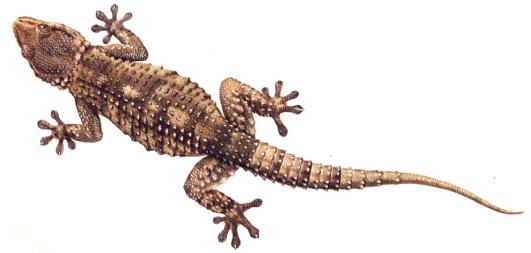
Ovidio nelle Metamorfosi, ci racconta di un giovincello che incautamente scoppiò a ridere vedendo la vecchietta Demetra bere il suo intruglio di polenta; gli dei, si sa, sono piuttosto permalosi e Demetra, inoltre, aveva già i suoi problemi a cui pensare, per cui gli gettò addosso la brodaglia e lo trasformò in un geco giallo, piccolo rettile che vive nelle crepe dei tetti. Ovidio ci narra anche di un'altra trasformazione operata da Demetra, questa volta per vendetta; infatti secondo la sua versione dei fatti, Persefone avrebbe mangiato ben sette chicchi di melograno, che non gli furono offerti da Ade, ma li colse da sola nel frutteto reale, il cui ortolano era un certo Ascalafo, fu questi, secondo Ovidio, che riferì l'accaduto a Ade e per questa spiata fu trasformato da Demetra in un Barbagianni, uccello portatore di malaugurio.
Ma non crediate che Demetra, nella sua comprensibile ira, si sia sfogata con tutti, anzi; come fu implacabile con chi le fu scortese, cosi fu cortese e ricompensò chi era stata gentile con lei e l'aveva aiutata. Tra gli altri Fitalo, il quale la ospitò, ebbe onori eterni per la sua stirpe e per lui Demetra fece crescere il primo fico.
Ma il più conosciuto è sicuramente Trittolemo, il cui nome significa Triplice guerriero. Su quest'ultimo però, le versioni sono diverse tra loro; c'è chi lo identifica con Demofonte, scampato al rogo o dice che ne fosse il fratello maggiore e che Demetra intendesse ricompensare il re Celeo e la moglie per averla accolta, altri invece dicono che fosse figlio del contadino Dysaules e della ridanciana Baubò i quali avrebbero aiutato Demetra nella ricerca di Persefone; di certo Trittolemo fu ricompensato da Demetra, che lo armò di un mannello di spighe, un aratro di legno e un carro trainato da serpenti e gli affidò la missione di insegnare all'umanità intera la coltivazione del grano; mica poco! Resta il dubbio sul perché un pacifico contadino si chiamasse "Triplice guerriero", ma a Eleusi, si sa, i misteri sono di casa!
A seguire alcune piccole informazioni:
Eschilo, il notissimo poeta tragico vi ebbe i natali nel 525 a.C.
Il famoso architetto Ictino, al tempo di Pericle, progettò il Telesterio, sala parzialmente intagliata nella roccia dove venivano celebrati i misteri eleusini.
Durante la Guerra del Peloponneso (431-404) gli Stati in guerra rispettarono il santuario.
I trenta tiranni di Atene si rifugiarono ad Eleusi dove, dopo la restaurazione del regime democratico, furono uccisi nel 401 a.C.
Fu una delle 12 città Attiche ad aderire al Sinecismo costituito da Teseo.
Eleusinie, feste in onore di Demetra e più tardi anche di Dioniso riservate soltanto agli iniziati mistoi. Celebrate ad Eleusi, erano distinte dai misteri eleusini e ricorrevano una volta l'anno le piccole Eleusinie e ogni cinque anni le grandi Eleusinie. In che cosa consistessero e cosa significassero realmente non è ben chiaro e poche sono le testimonianze pervenuteci.
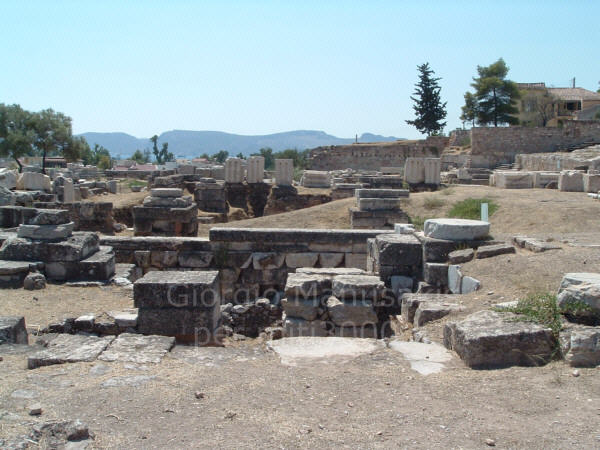
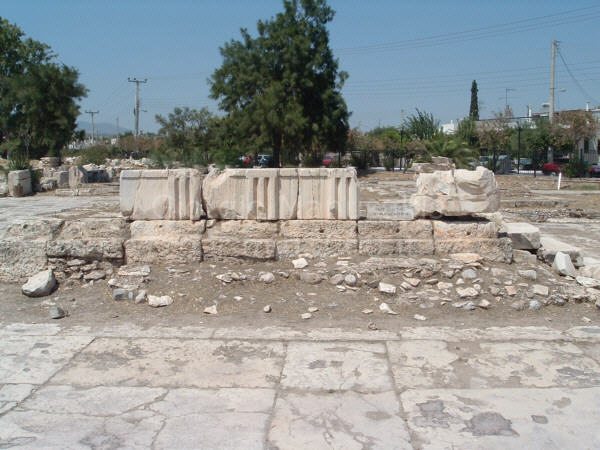
Dell'antica città di Eleusi sono rimaste soltanto alcune rovine, riportate alla luce con gli scavi iniziati nel 1882. I reperti archeologici sono conservati nei musei di Eleusi e di Atene, alcune delle quali visibili nella sezione Musei del nostro sito.
Eleusis, Eleusis is a town about twenty kilometers from Athens, home to the archaeological site including the sanctuary of Demeter and Kore, where the famous Eleusinian Mysteries were celebrated in ancient times (view it with Google Maps). The name Eleusis seems to derive from a hero of unclear paternity, but another hypothesis holds that it derives from éleusis, Greek for "coming," referring to the arrival of Demeter in Eleusis in mortal form after the abduction of her daughter Kore. Initially independent, in the 7th century BC it allied itself with Athens, becoming part of the Attic state.
It was an important religious center until 381 AD, when Theodosius ordered the closure of the sanctuary; it was later destroyed by the barbarians and abandoned by the population in 396 AD. Eleusis is currently a modern town called Elefsina and, in addition to having the beautiful site Archaeologically, it is also an important industrial center.
The ancient center was located between the sea and the base of a hill and was surrounded by walls.
The sanctuary of Demeter and Kore is located at the foot of the acropolis and is preceded by the large propylaea. It was the subject of several restorations and expansions by Pisistratus, Cimon, and Pericles. The latter created the definitive version of the temple, with a square plan, and added the large hall, designed by Ictinus.
Subsequently, the Doric portico was added and, in Roman times, the small propylaea, from which the sacred way began, along which the Plutonion and a cave that represented the entrance to Hades are located.
The telesterion was the hall where the initiation ceremony took place and consisted of eight naves with rows of six columns; Numerous works of art decorated it, some, such as a relief of Triptolemus, Demeter and Kore from the 5th century BC, can be admired at the National Archaeological Museum of Athens; numerous other reliefs and works of art are present in the small museum on the archaeological site.
We know about the functions, processions and festivals of the preliminary phases of the Eleusinian Mysteries, all public ceremonies. It is also known that this type of celebration was not well regarded by everyone, so much so that the famous Athenian politician Alcibiades was accused of having participated, among other rites, also in the Eleusinian Mysteries, but there is little and uncertain information about what happened during the actual celebration.
In fact, only initiates could participate in the rites celebrated in the Telesterion, which represented the heart of the ceremony, and they were obliged to maintain the strictest secrecy; Given what's been revealed so far, we can only congratulate them on how well they've kept the secret!
But let's get to the part of our closest expertise: the myth.
As we have said, Eleusis is closely linked to Demeter and Persephone. In fact, as the Homeric hymn to Demeter tells us, one fine day her beautiful daughter Persephone, also called Kore because of her youth, was playing with her friends in the meadows until she saw a flower she had never seen before; this flower, not coincidentally, was the narcissus, which, being a bulbous plant, spends part of the year underground, a fate it would share with the young Persephone; in fact, the very moment Kore picked the flower, a chasm opened up from which the god Hades emerged, who forcefully loaded her onto his golden chariot, drawn by two immortal horses, and carried her to his kingdom.
(in this regard we read a verse from the Second Homeric Hymn:
while he was playing with the daughters of Oceanus,
full-breasted girls, and he was picking flowers:
roses and crocuses and lovely violets and hyacinths
on the tender meadow; and the narcissus that,
to deceive the beautiful girl, by Zeus' will,
the Earth had produced, indulgent to that deity
who hosts many men: a bright flower
a marvel for all to see: both for the immortal
gods and for ephemeral men:
a hundred corollas sprouted from the root
and the high heavens and all the earth and the sea waves enjoyed the fragrant scent.
Astonished, she stretched out her hands to grasp
that sweet ornament: when behold, in the wide
field of Nysa the earth opened up and out
the lord who hosts many men
came out on immortal mares, the god
of many names, son of Cronus; and she
reluctantly he kidnapped:
For the god of the underworld, in fact, it would not have been easy to convince his niece Persephone, with whom he had fallen in love, to become queen of his kingdom and, therefore, to move to his not-so-pleasant abode; so he devised the stratagem of abduction with a final wedding to make amends, a plan that later became a model among mortals too. The origin of all abductions, according to tradition, took place in Sicily, more precisely near Lake Pergusa, near Enna, but the abductor and the abductee would later have entered the realm of Hades by sinking near Syracuse in a place where, ever since, the spring Ciane, the Dark, has gushed forth; the inhabitants of Eleusis, however, maintained that Hades had emerged near their town and, in support of this hypothesis, myths narrated by the Orphics, preceding the Homeric hymns, are cited, in which it is said that Demeter, in search of her beloved daughter, while walking through the field of Rarus, between Athens and Eleusis, came across the farmer Dysaules, his wife Baubo and their sons Triptolemus, Eumolpus and Eubuleus; the latter was a swineherd and his pigs were swallowed up in the same precipice in which Hades and Persephone sank and his brother Triptolemus reported the matter to Demeter who rewarded him as we will see later; in relation to this version it must be remembered that in the celebrations of the Eleusinian Mysteries, the aspirants to initiation performed a rite at the Phaleron beach, which involved jumping into the sea by running, and with them carrying a piglet to the sea, which was then sacrificed. The Homeric hymn to Demeter, in turn, calls the site of the abduction "the plain of Nysa," which is not easily locatable as many places are referred to by this same name.
But, returning to the abduction of the beautiful Kore, it must be said that Zeus, in his omnipotence, was not entirely unaware of his brother Hades' plans; in fact, it seems he was the one who gave her in marriage to the god of the underworld!
Now, what does a mother do when her daughter suddenly disappears? She cries and searches everywhere for her. And that's exactly what Demeter did. Being a goddess, she didn't just act like a normal mother, but searched for her personally, flying like a bird to every corner of the world for nine days, but to no avail. At this point, Helios, the all-seeing god of the Sun, intervened; Demeter turned to him to find out where her beloved daughter was and who had kidnapped her. and Helios responded by revealing the whole truth to her and pointing out Zeus as the main culprit, finally trying to convince her that Hades was not, after all, an unworthy son-in-law, since he ruled a third of the universe.
But what mother would be happy to see her daughter in the realm of the underworld, even as queen? Even Demeter, therefore, understandably was not at all happy, so she descended from Olympus indignantly, took the form of a harmless old woman and began to wander among mortals, until she reached Eleusis; here she sat, crying, on a stone next to the well of the Virgins or Callicoro, where the four daughters of the king of Eleusis, Celeus, saw her and invited her to go to their house; there Demeter refused what was offered to her and had a drink made with barley, Water and fine mint, which was later called kykeon, this, with the addition of honey and goat's cheese, was used by the Greeks as a sacred libation and an energetic thirst-quencher, while Nestor in the Iliad also has us add a little wine from Pramnus. In the king's house, a nurse was needed for his newborn son, Demophon, and this task was entrusted to Demeter. The goddess worked hard to raise the child strong and robust and would have even made him immortal if the queen, Metanira, had not spied Demeter and found her wrapping Demophon in fire. Seeing this, Metanira began to scream that the old woman wanted to kill her son, enraging Demeter, who resumed her divine form and ordered that a temple be built in her honor in which rites would be celebrated, which she herself would teach them.
And in that temple the goddess remained, still mourning the loss of her beloved daughter. In her sadness, Mother Earth allowed nothing more to grow, causing a great famine. Humans were dying of hunger, and with their death, the veneration and sacrifices to the gods would also cease. For this reason, Zeus was forced to intervene. First, he sent the goddess Iris to recall Demeter from her temple in Eleusis and convince her to return to Olympus. But Demeter would not budge. So Zeus sent all the other gods to her with the most beautiful gifts imaginable, but none of them could convince her to return to the sacred mountain. What else could Zeus do? He tried to convince his brother Hades to return his beautiful wife to her mother, and to this end, he sent Hermes to the Underworld. Strangely enough, the god with the golden rod didn't have much trouble convincing Hades; in fact, Hades welcomed him with a smile and handed Persephone over to him so he could take her to her mother. But such generosity, as often happens, hid a trick: the very moment Hades freed Persephone, he handed her a sweet pomegranate seed, also known as the food of the dead, behind her back. The goddess knew that if she ate it, she would never return to the world of the living, but she ate it likewise, and on her good faith, we won't dwell on it, referring you to the many other pages on our site and reminding you that you can always request further information. Persephone, accompanied by Hermes, nevertheless reached her mother Demeter on the surface. Demeter, after happily embracing her, asked her if she had eaten the food of the dead, and her daughter was forced to admit what she had done. It took a new intervention from Zeus to finally mediate the matter. The king of Olympus established, given the circumstances, that Persephone would remain on Olympus with her mother and the other gods for nine months of the year, while for the remaining three she would join her husband in the Underworld. This decision calmed Demeter, and everything on earth began to flourish again, but in the three months in which Persephone reaches her husband, sadness once again takes hold of Demeter, the world freezes, and nothing flourishes anymore; to this we owe winter.
Other minor myths of Eleusis are also linked to the main one we have just told you.
Ovid, in his Metamorphoses, tells us of a young man who unwisely burst out laughing when he saw the old woman Demeter drinking her polenta concoction; the gods, as we know, are rather touchy, and Demeter, moreover, had her own problems to deal with, so she threw the broth at him and transformed him into a yellow gecko, a small reptile that lives in cracks in roofs. Ovid also tells us of another transformation performed by Demeter, this time out of revenge; In fact, according to her version of events, Persephone ate seven pomegranate seeds, which were not offered to her by Hades, but rather picked by herself in the royal orchard, whose gardener was a certain Ascalaphus. It was he, according to Ovid, who reported the incident to Hades and for this tip-off was transformed by Demeter into a barn owl, a bird bearing ill omens.
But do not believe that Demeter, in her understandable anger, vented her anger on everyone; on the contrary, just as she was implacable with those who were rude to her, so she was courteous and rewarded those who had been kind to her and helped her. Among others, Phytalus, who hosted her, received eternal honors for his lineage, and for him Demeter made the first fig tree grow.
But the best known is certainly Triptolemus, whose name means Triple Warrior. Regarding the latter, however, there are differing versions; some identify him with Demophon, who escaped the stake, or say he was his older brother and that Demeter intended to reward King Celeus and his wife for having welcomed her; others say he was the son of the farmer Dysaules and the laughing Baubò, who helped Demeter in her search for Persephone; Triptolemus was certainly rewarded by Demeter, who armed him with a bundle of ears of corn, a wooden plow, and a chariot drawn by snakes, and entrusted him with the mission of teaching all humanity how to grow wheat; not a small feat! The question remains as to why a peaceful farmer was called "Triple Warrior," but in Eleusis, as we know, mysteries are at home!
Here's some small information:
Aeschylus, the famous tragic poet, was born here in 525 BC.
The famous architect Ictinus, during the time of Pericles, designed the Telesterium, a hall partially carved into the rock where the Eleusinian mysteries were celebrated.
During the Peloponnesian War (431-404), the warring states respected the sanctuary.
The thirty tyrants of Athens took refuge in Eleusis, where, after the restoration of the democratic regime, they were killed in 401 BC.
It was one of the 12 Attic cities to join the Synoecism established by Theseus.
Eleusinia, festivals in honor of Demeter and later also of Dionysus, reserved only for the initiated mistoi. Celebrated at Eleusis, they were distinct from the Eleusinian mysteries and occurred once a year, the small Eleusinia, and every five years the great Eleusinia. What they actually consisted of and what they actually meant is unclear, and little evidence has survived.
Of the ancient city of Eleusis, only a few ruins remain, brought to light during excavations that began in 1882. The archaeological finds are preserved in the museums of Eleusis and Athens, some of which can be viewed in the Museums section of our website.