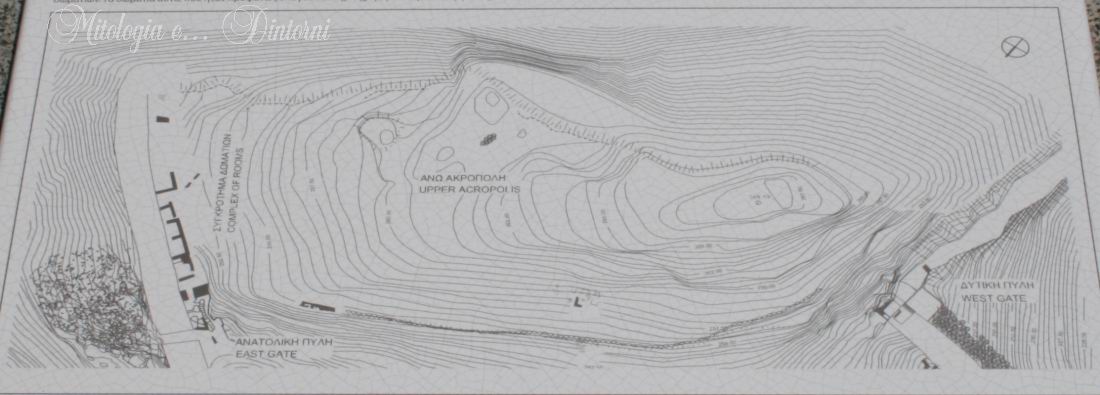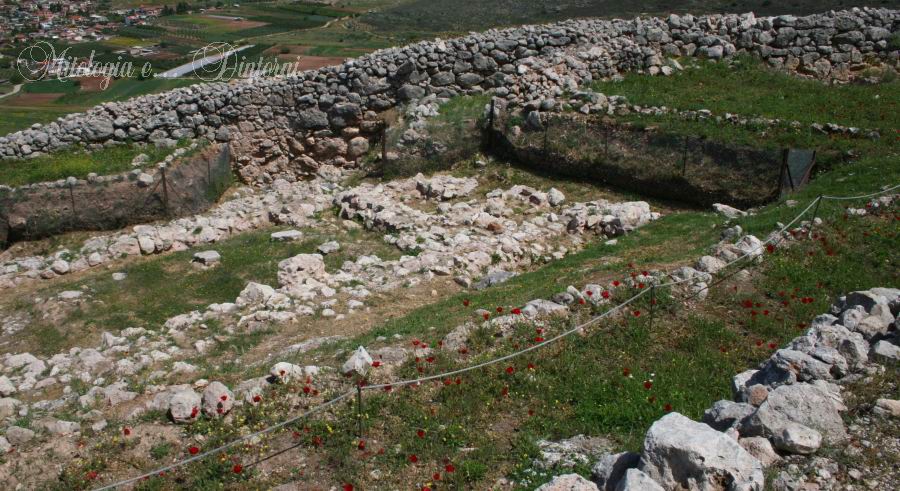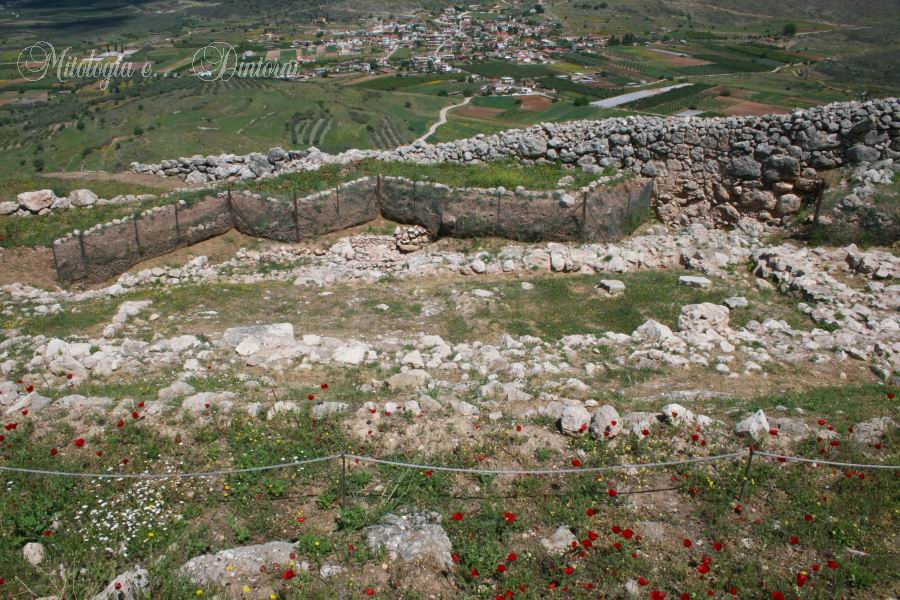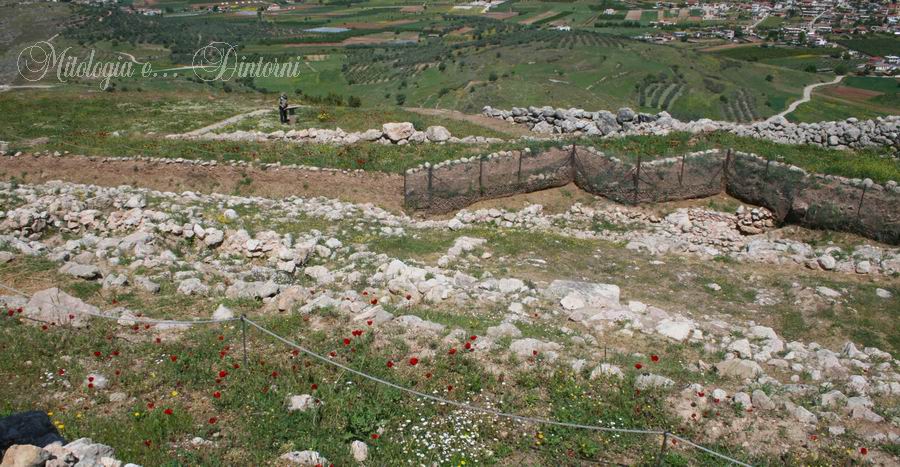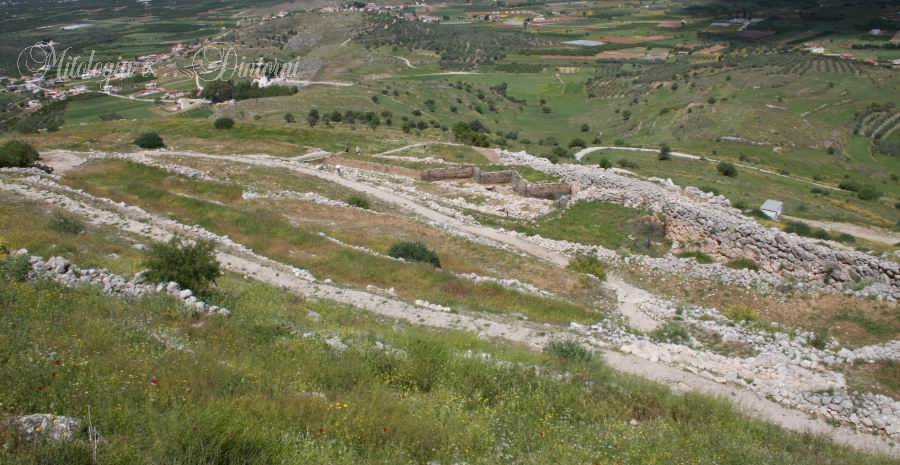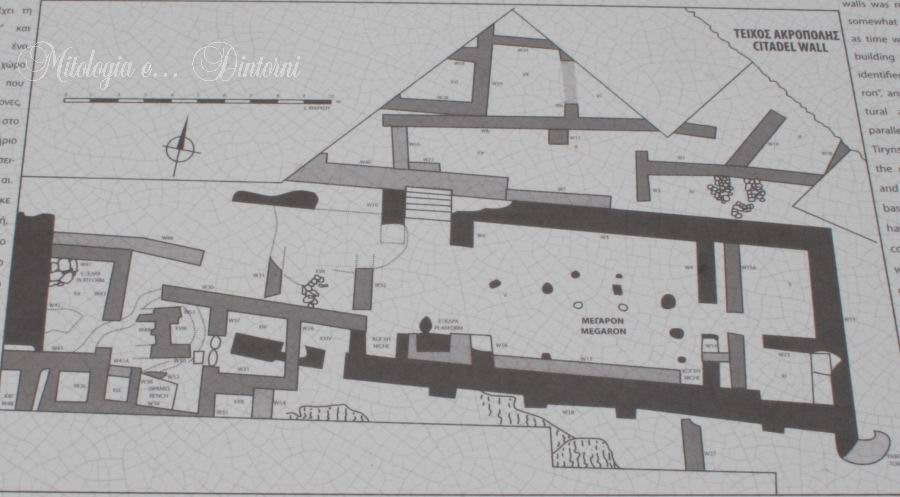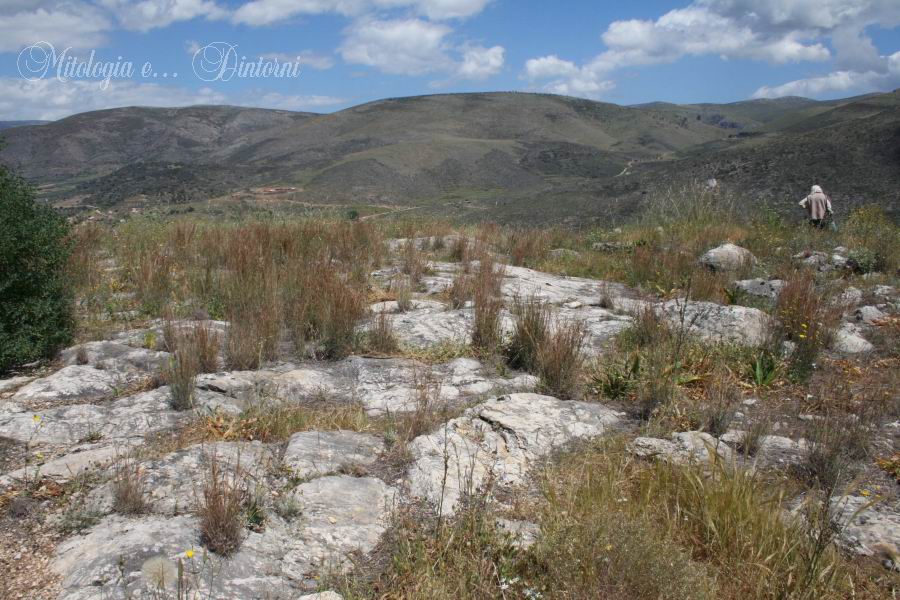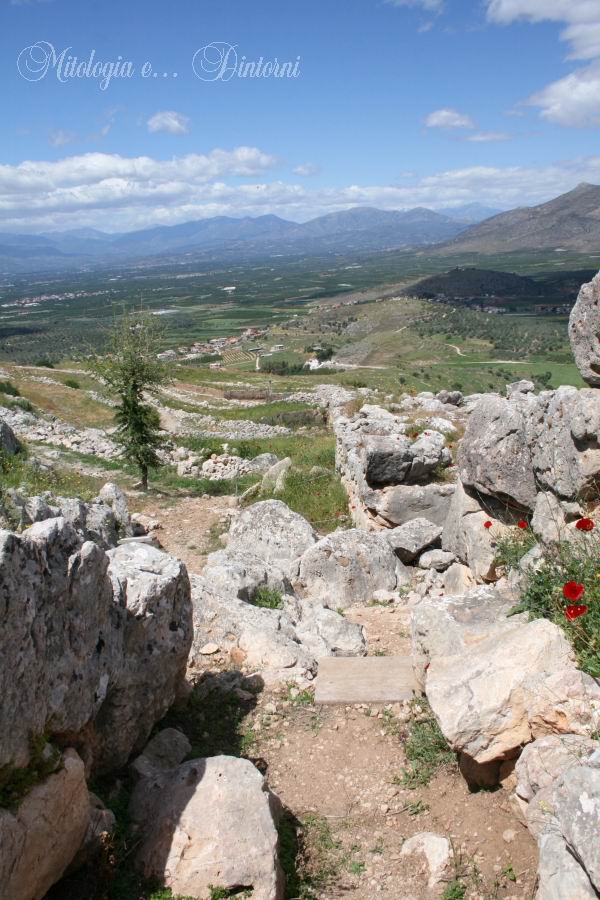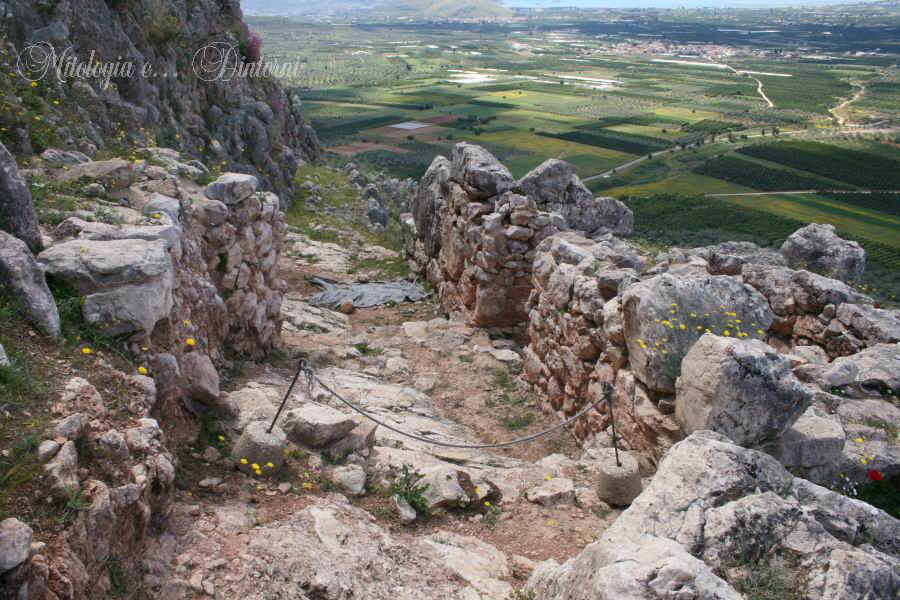
Μῐδέα, antichissima città greca locata nella piana argiva tra Micene e Argo, vicinissima a Dendra con la quale ha strette relazioni (ne raccomando la lettura). Le rovine di Midea sono state identificate con un sito miceneo (1500 - 1200 a.C.) fornito di mura ciclopiche, palazzo, necropoli, tomba reale a tholos e tombe a camera. Ebbe il suo massimo sviluppo in epoca micenea. Gli scavi hanno portato alla luce eccezionali tesori. Gli oggetti di bronzo, vasellame e varie sono esposti al Museo Nazionale di Atene. L'opera di fortificazione di Midea era attribuita a Perseo (Apollodorooro 2, 4, 4), e Midea, con Tirinto e Micene, costituirono il regno dei figli di Perseo, Alceo, Stenelo ed Elettrione. Le fonti non specificano se ognuno dei tre figli di Perseo regnasse su una singola città, ma Pausania, attribuendo a Elettrione il regno di Midea, non fa che seguire la tradizione secondo la quale la figlia di Elettrione, cioè Alcmena, era chiamata Mideatide (= donna di Midea [Teocr. 13, 20]).
Miti correlati:
Perseo, fortificò le mura. Secondo la tradizione (Apollodoro. Epit. 2, 10-14) Atreo e Tieste, cacciati dal padre che li sospettava come assassini di Crisippo (scol. Eur. Or. 4), si rifugiarono presso Euristeo o presso Stenelo. Secondo alcuni, Euristeo, quando partì per far guerra agli Eraclidi, lasciò reggente a Micene Atreo, che, alla morte di Euristeo, fu fatto re (Tuc. 1, 9); secondo altri, Atreo e Tieste, dapprima stabiliti a Midea (Apollodoro. 2, 4, 6), alla morte di Euristeo furono chiamati a Micene, per consiglio dell'oracolo, perché uno dei due ne assumesse il governo. Segno distintivo particolare, atto a garantire l'elezione a re, era, come voleva un accordo intervenuto tra i fratelli, il possesso di un agnello cornuto dal vello d'oro, che Ermes (o Artemide, v. scol. Eur. Or. 995 e 998) aveva introdotto nel gregge di Pelope, perché fosse motivo di lotte fratricide per la stirpe di Pelope. Atreo, ereditato l'agnello, anziché sacrificarlo ad Artemide, come aveva promesso, lo aveva tenuto nella sua casa, ucciso e custodito in una cassa; ma Tieste, sedotta la moglie di Atreo, Aerope, se lo fece consegnare e così, risultato possessore dell'agnello, ebbe il regno di Micene. Atreo, però, favorito da Zeus, dietro suggerimento di Ermes, concordò con Tieste che sarebbe stato lui il re, se il sole avesse mutato il suo corso. Zeus allora fece fermare il carro di Elio a metà del suo cammino e lo fece tornare a Oriente e così Atreo fu re e Tieste fu mandato in esilio.
Igino narra che Crisippo fu ucciso da Atreo e Tieste aizzati dalla loro madre Ippodamia. Quando Pelope accusò Ippodamia, ella si suicidò Oppure andò in esilio a Midea; di lì le sue ossa furono riportate a Olimpia, dove l'eroina aveva un santuario, l’Hippodameion, che veniva aperto una volta all'anno ed era riservato alle donne.
Anche una delle Danaidi si chiamava Midea e fu colei che uccise lo sposo Antimaco
Madea, an ancient Greek city located on the Argive plain between Mycenae and Argos, very close to Dendra with which it has close relations (I recommend reading it). The ruins of Midea have been identified as a Mycenaean site (1500-1200 BC) with Cyclopean walls, a palace, a necropolis, a royal tholos tomb, and chamber tombs. It reached its peak in the Mycenaean era. The excavations have uncovered exceptional treasures. The bronze objects, pottery, and other artefacts are on display at the National Museum of Athens. The fortification of Midea was attributed to Perseus (Apollodorooro 2, 4, 4), and Midea, with Tiryns and Mycenae, constituted the kingdom of the sons of Perseus, Alcaeus, Sthenelus and Electryon. The sources do not specify whether each of Perseus' three sons ruled a single city, but Pausanias, in attributing the kingdom of Midea to Electryon, is merely following the tradition according to which Electryon's daughter, Alcmene, was called Mideatis (= woman of Midea [Theocr. 13, 20]).
Related myths:
Perseus fortified the walls. According to tradition (Apollodorus. Epit. 2, 10-14) Atreus and Thyestes, driven out by their father who suspected them of being the murderers of Chrysippus (scol. Eur. Or. 4), took refuge with Eurystheus or Sthenelus. According to some, when Eurystheus left to wage war against the Heraclids, he left Atreus as regent in Mycenae, who, on the death of Eurystheus, was made king (Thuc. 1, 9); according to others, Atreus and Thyestes, initially settled in Midea (Apollodorus. 2, 4, 6), were called to Mycenae on the advice of the oracle upon the death of Eurystheus, so that one of them would assume the government. A special distinguishing mark, designed to guarantee election as king, was, as stipulated by an agreement between the brothers, the possession of a horned lamb with a golden fleece, which Hermes (or Artemis, see Eur. Or. sc. 995 and 998) had introduced into Pelops's flock, to be a source of fratricidal strife for Pelops's lineage. Atreus, having inherited the lamb, rather than sacrifice it to Artemis, as he had promised, had kept it in his house, killed, and guarded in a chest; but Thyestes, having seduced Atreus's wife, Aerope, had it handed over to him and thus, having been found in possession of the lamb, was granted the kingdom of Mycenae. Atreus, however, favored by Zeus, at the suggestion of Hermes, agreed with Thyestes that he would be king if the sun changed its course. Zeus then stopped Helios's chariot halfway and returned it to the East, and so Atreus became king and Thyestes was sent into exile.
Hyginus narrates that Chrysippus was killed by Atreus and Thyestes, incited by their mother Hippodamia. When Pelops accused Hippodamia, she committed suicide. Or she went into exile in Midea; from there her bones were brought back to Olympia, where the heroine had a sanctuary, the Hippodameion, which was opened once a year and was reserved for women.
One of the Danaids was also called Midea and it was she who killed her husband Antimachus.