Σῐκῠών, antica città del Peloponneso, nella regione storica dell'Acaia, situata in origine nella piana sul Golfo di Corinto.
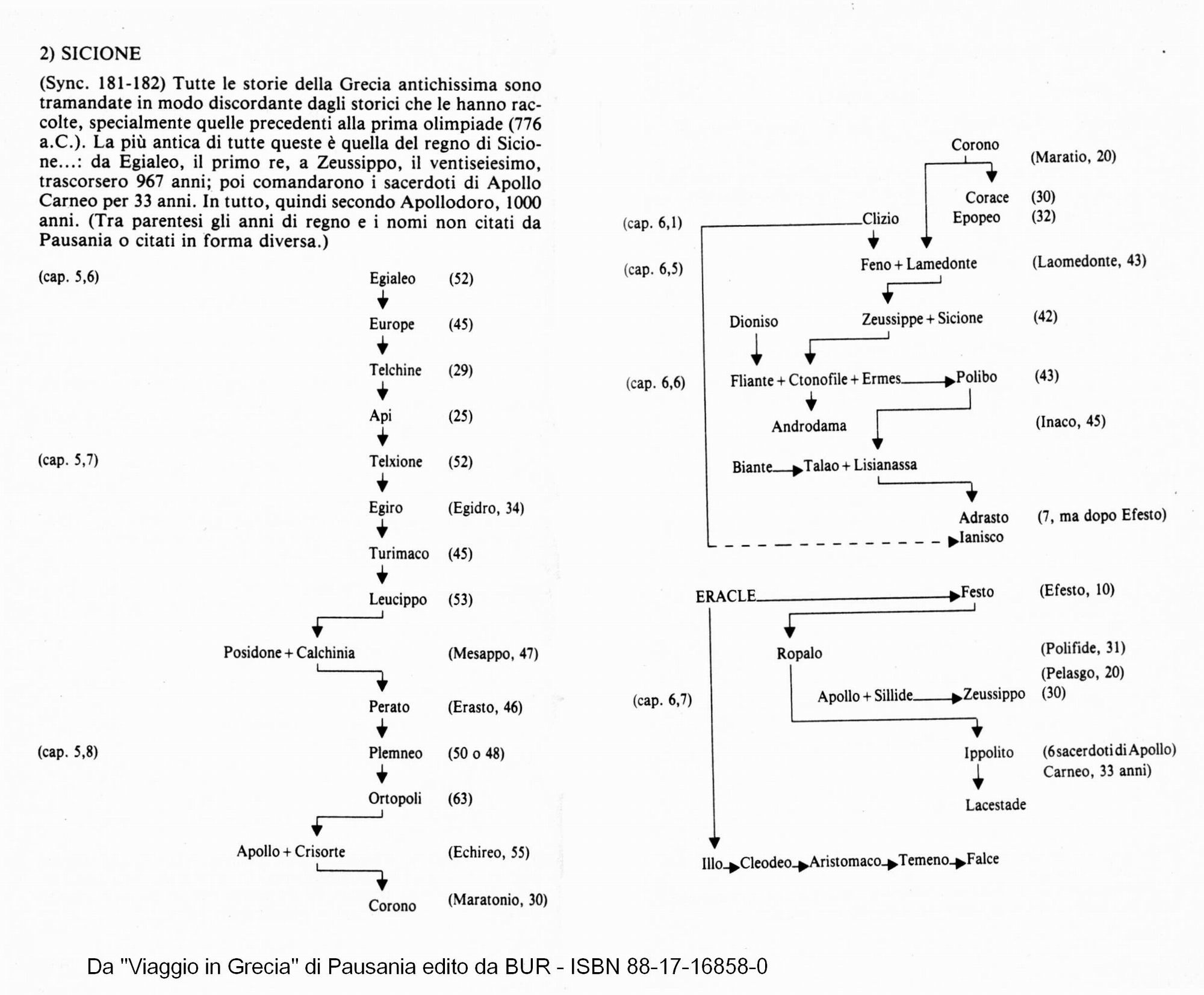
Sicione raggiunse grande splendore nel VII secolo a.C. sotto la tirannia degli Ortagoridi, il cui esponente più importante fu Clistene. In questo periodo la pittura e la scultura si svilupparono a tal punto da rendere celebre la città nei secoli. Mostra i re da Egialeo a Zeusippo
Sparta nel 510 a. C. rovesciò la tirannide e Sicione entrò nella lega peloponnesiaca.
Demetrio Poliorcete durante la sua guerra contro Cassandro occupò diverse città del Peloponneso e tra queste Sicione (303 a.C.) e, distrutta la città vicina al porto, convinse o costrinse i Sicionii a trasferirsi in un luogo più sicuro (v. Diod. 20, 102, 2 sgg.; Plut. Demetr. 25, 3; Strab. 8, 6, 25, p. 382) a venti (o dodici) stadi dal mare, su un altipiano dominato da un’acropoli (presso l’odierno Vasiliko), che fortificò. La nuova città si chiamò Demetriade. La Sicione preellenistica si trovava nella piana sottostante, presso l’odierno Kiàton.
Dopo che Mummio nel 146 a.C., distrusse Corinto, Sicione si impegnò a celebrare i giochi Istmici per tutto il tempo in cui la città restò disabitata, e, quando fu di nuovo abitata, i sicionii restituirono quell’onore agli attuali abitanti.
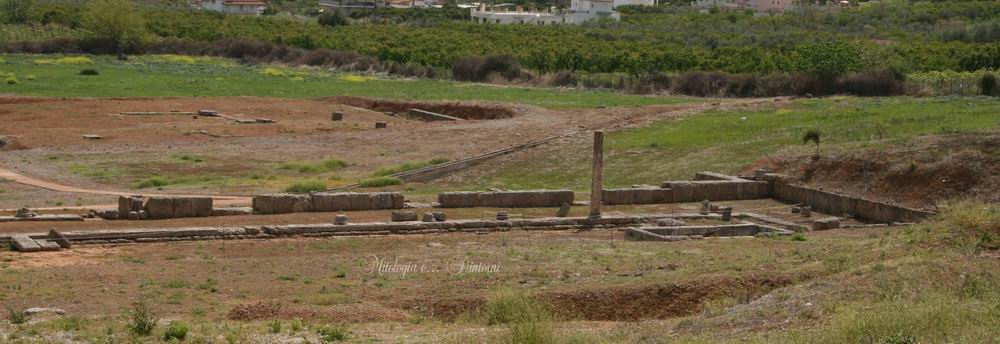
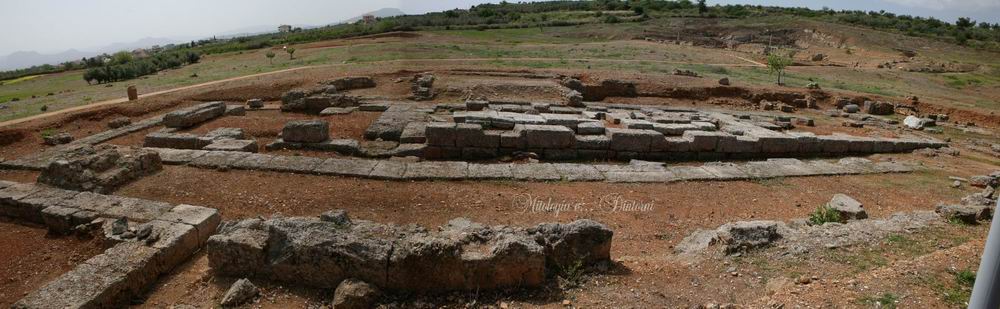
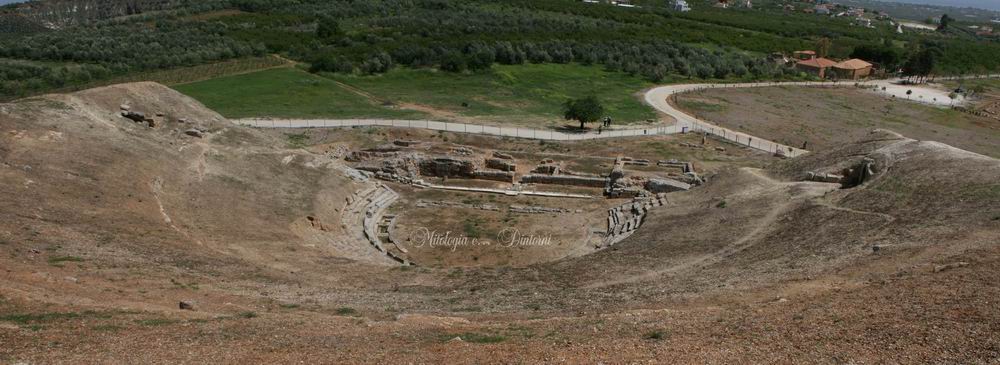
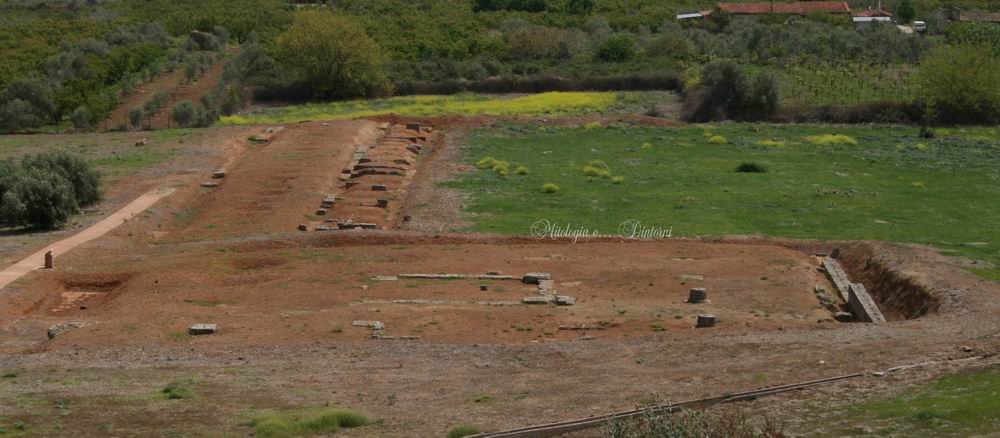
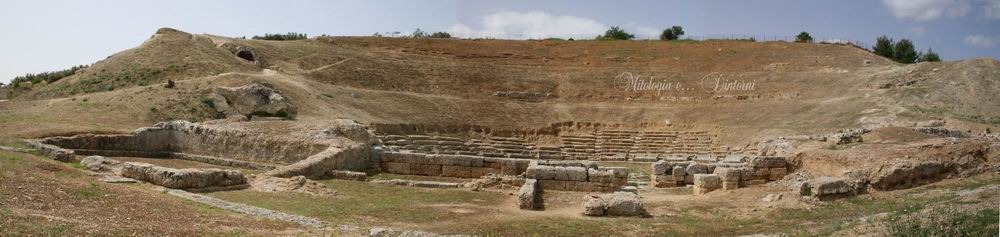
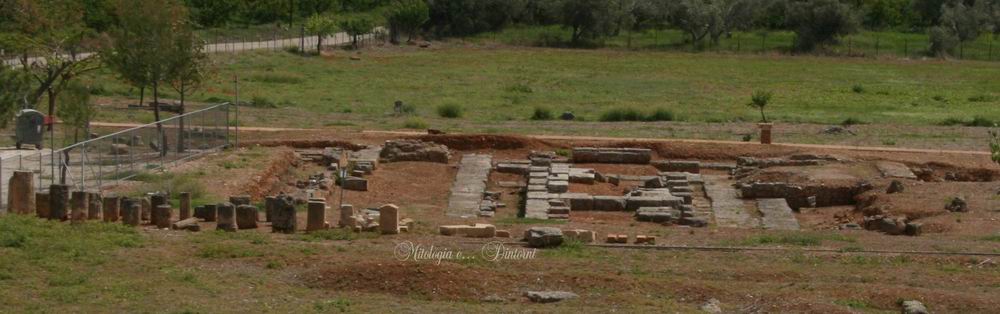
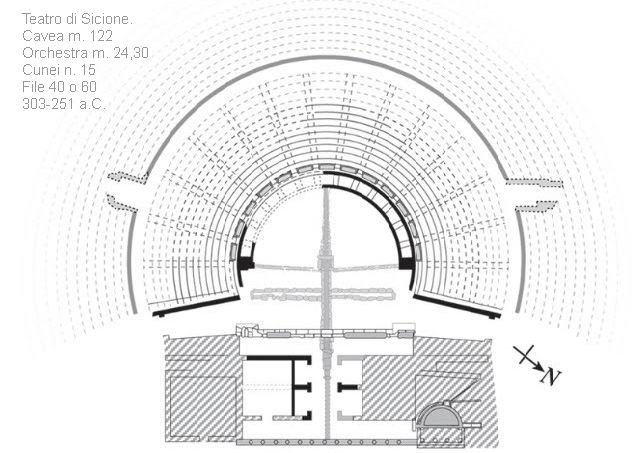
Della città le ricerche archeologiche hanno riportato alla luce l'agorà ellenistica circondata da portici, un tempio, un'ampia sala con colonne (probabilmente la sala di riunione della lega achea) e un grande ginnasio a terrazze, dove si trovava una celebre statua di Eracle, opera di Scopa. A nord-est sono il teatro (mostra lo schema), uno dei più grandi della Grecia, della prima età ellenistica con interventi di epoca romana, e lo stadio. Il museo è ricavato dalle terme romane (II secolo d.C.).
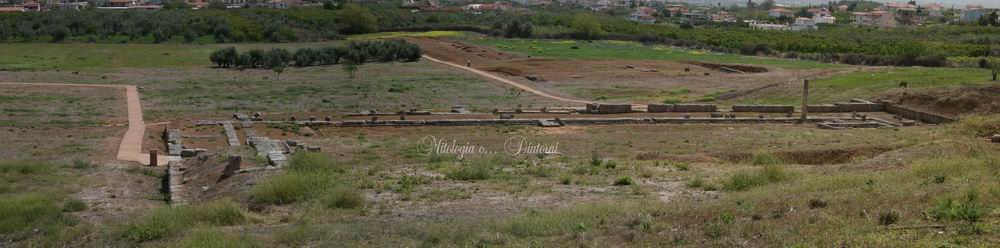
La fonte Stazusa è probabilmente localizzata al bordo orientale dell’altopiano.
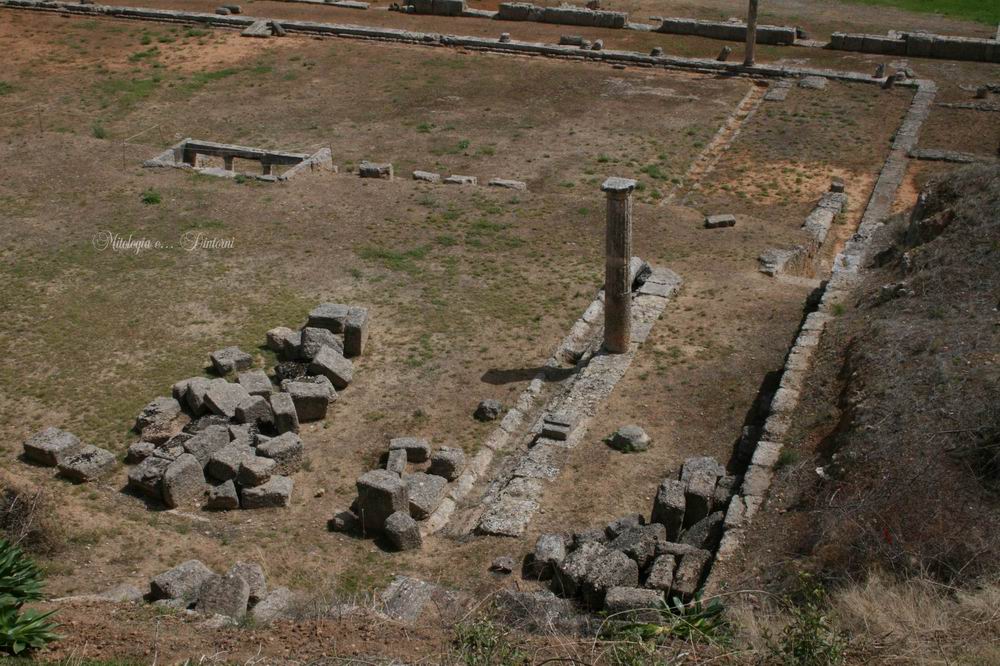
Sull’acropoli ellenistica di Sicione restano solo scarse tracce di edifici. Della Tyche Acrea abbiamo raffigurazioni su monete Pochi i resti degli edifici pubblici e sacri dell’agorà di Sicione. Le fondamenta di un tempio potrebbero appartenere al tempio di Artemide o a quello di Apollo.
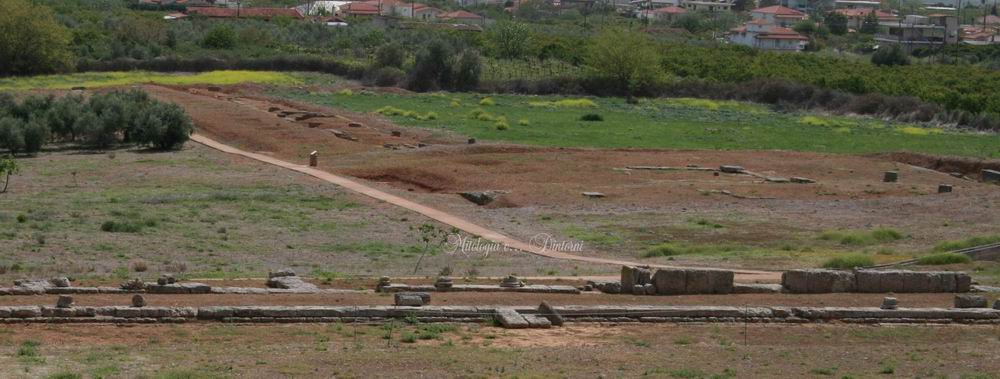
Il ginnasio, presso l’agorà, è il monumento più notevole di Sicione dopo il teatro. Costruito all’inizio del III sec. a.C., era ornato da fontane. Questo ginnasio sembrerebbe essere diverso da quello di Clinia, ma potrebbe essere parte del complesso chiamato Pedize (da pais = fanciullo; cioè luogo destinato all’educazione dei fanciulli). La mancanza di precisi riferimenti archeologici rende possibili altre ipotesi.
l’Asopia ebbe il suo nuovo nome da quello di Sicione e l’Asopia è la terra percorsa dall’Asopo, cioè il territorio di Sicione.
Adesso leggeremo parte della descrizione dataci da Pausania in "Viaggio in Grecia"
il primo a vivere in questa regione, essendone nato, fu Egialeo; che, quando egli ne era re, tutta quella parte del Peloponneso che ancor oggi si chiama Egialo, ebbe nome da lui e che fu lui il primo a fondare nella pianura la città di Egialea.
Quando Sicione divenne re, la regione fu chiamata dal suo nome Sicionia e la città Sicione invece di Egiale. E dicono che Sicione era figlio non di Maratone figlio di Epopeo, bensì di Mezione figlio di Eretteo.
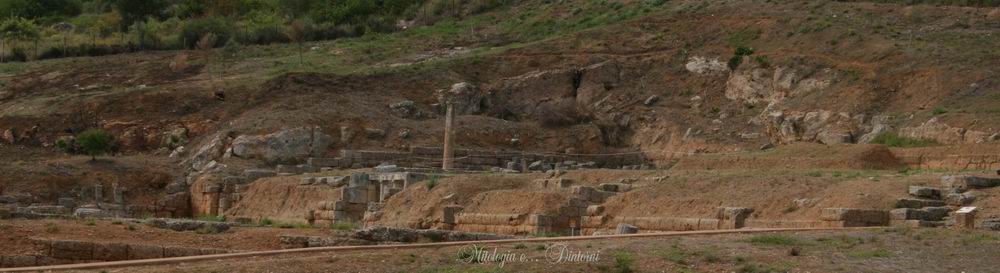
Omero ha detto di Zeus (Iliade 2, 117) «il quale di molte città distrusse le rocche». Quando dunque i Sicionii avevano perduto ogni splendore, s’abbatté su di loro un terremoto che per poco non svuotò di gente la città e distrusse inoltre molti dei loro monumenti più belli.
Presso la porta della città, in una grotta, i Sicionii avevano una fonte la cui acqua, anziché zampillare da terra, scorreva giù dalla volta della grotta e perciò la fonte fu chiamata Stazusa (Stillante).
Nell’odierna acropoli ci sono il santuario di Tyche Acrea e, appresso, quello dei Dioscuri. Le statue dei Dioscuri e di Tyche sono di legno. Nel teatro costruito sotto l’acropoli, sulla scena, c’è la statua di un uomo che tiene lo scudo: dicono che sia Arato figlio di Clinia. Dopo il teatro c’è il tempio di Dioniso con la statua criselefantina del dio e, presso di lui, statue in marmo bianco di baccanti. Queste donne, essi dicono, sono consacrate alla divinità e furoreggiano per Dioniso. I Sicionii hanno altre statue che custodiscono nel più assoluto segreto e che trasportano, una sola notte all’anno, dall’edificio che essi chiamano Cosmeterio al tempio di Dioniso e accompagnano con fiaccole ardenti e con canti tipici del luogo.
Se dal tempio di Dioniso si va verso la piazza, si trova sulla destra il tempio di Artemide Limnea. Che il tetto sia franato, basta vedere per capirlo. Circa la statua della dea non sanno dire né se sia stata trasportata altrove, né in che modo sia andata distrutta sul posto.
Entrando nella piazza si trova il santuario di Peitho, anche questo privo della statua. Il culto di Peitho fu da loro istituito per la seguente ragione. Apollo e Artemide, dopo aver ucciso Pitone, giunsero a Egialea per purificarsi; ma presi dal terrore quand’erano nel luogo che ancor oggi chiamano Fobo (Paura), i due dei cambiarono strada e andarono a Creta presso Carmanore, mentre la gente di Egialea fu assalita da un morbo. Gli indovini li invitarono allora a supplicare la benevolenza di Apollo e di Artemide.
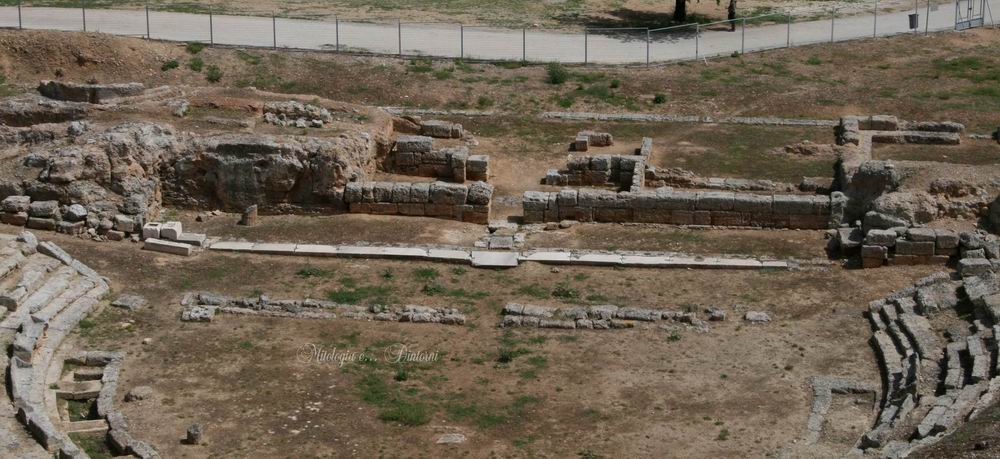
Dopo il sacrario di Arato c’è un altare di Posidone Istmio; notiamo poi uno Zeus Milichio e un’Artemide detta Patroa: due opere fatte senz’arte. Il Milichio somiglia a una piramide e la dea a una colonna. Qui è costruita anche la sala del Consiglio.
Lì vicino un santuario di Apollo Licio, ormai in rovina, non merita attenzione. Poiché la loro zona era frequentata da lupi (Licio da lykos = lupo) che assalivano i greggi al punto che non se ne poteva più trarre frutto, il dio indicò un luogo dove giaceva un tronco secco, e con un suo oracolo li invitò a esporre a quelle fiere la corteccia di quel legno mescolata a pezzi di carne. E subito la corteccia fece perire i lupi appena quelli l’assaggiarono.
Salendo da qui verso il ginnasio, sulla destra si trova un santuario di Artemide Ferea, la cui statua lignea dicono che sia stata qui trasportata da Fere.
Personaggi famosi legati alla città
- Arato, Stratego della Lega achea (275 circa - 213 a. C.).
- Clìstene, tiranno di Sicione tra il 600 e il 570 a. C.; assicurò alla città grande potenza.
- Lisippo, scultore (n. Sicione 370 a. C.). Fu attivo nell'età di Alessandro Magno.
- Neòfrone, poeta tragico greco (sec. 4º a. C.).
- Arìfrone, poeta lirico in Atene e corodidascalo alla fine del 5º sec. a. C..
- Arato di Sicione il Giovane, figlio (n. 249 circa a. C.) di Arato di Sicione, fu stratego della Lega achea (219-18)
- Pàusia, pittore (prima metà del sec. 4º a. C.) di Sicione; allievo di Panfilo, perfezionò la tecnica dell'encausto.
- Tisìcrate, bronzista (attivo 320-280 a. C. circa), figlio di Teniade di Sicione.
- Nealce, pittore (3º sec. a. C.), appartenne alla scuola di Sicione.
- Dèdalo, scultore bronzista (fine 5º - prima metà 4º sec. a. C.), figlio e scolaro di Patrocle.
- Cànaco, scultore di Sicione, attivo intorno al 500 a. C., autore di un colossale simulacro bronzeo di Apollo Filesio, ecc.
- Ortàgora, primo tiranno di Sicione (ultimi decenni sec. 7º a. C.). Le leggende antiche su di lui e sulla sua famiglia (Ortagoridi) sono varie e difficilmente conciliabili.
- Eutìchide, scultore, scolaro di Lisippo, nato a Sicione: Plinio lo nomina fra gli artisti della 121a Olimpiade (296-292 a. C.).
- Macóne, poeta (seconda metà sec. 3º a. C.) della commedia nuova, nativo di Corinto o Sicione, vissuto ad Alessandria.
- Lisìstrato, scultore (sec. 4º a. C.), fratello di Lisippo; secondo Plinio introdusse l'uso delle "maschere" per rilevare le fattezze dei personaggi.
- Alipo, bronzista di Sicione, attivo tra il sec. 5º e il 4º a. C., allievo di Naucide, poi seguace della scuola argiva di Policleto.
- Eutìcrate, scultore figlio di Lisippo; è ricordato da Plinio, che elenca alcune delle sue opere (Ercole a Delfi, Muse ecc-
- Cratesìpoli, moglie di Alessandro figlio di Poliperconte, dominò per qualche anno, dopo l'uccisione del marito a Sicione (314 a. C.).
- Cleóne, scultore di Sicione del 4º sec. a. C. Di lui sono ricordate molte statue a Olimpia; una sua firma è stata rinvenuta a Delfi.
- Mnasalca, poeta di Sicione, fiorito intorno alla metà del sec. 3º a. C.
- Prassilla, poetessa di Sicione (fiorita metà sec. 5º a. C.), famosa autrice di ditirambi, scolî e inni.
- Daippo, scultore di Sicione (prima metà 3º sec. a. C.), figlio e scolaro di Lisippo.
- Telèfane, pittore di Sicione, nominato da Plinio con Aridice di Corinto.
- Pàtrocle, (sec. 5º a. C.), padre di Dedalo e di Naucide minore: secondo Pausania eseguì con Canaco a Delfi dieci statue di navarchi.
- Talète, pittore secondo Diogene Laerzio, era di Sicione.
- Melànzio, pittore della scuola sicionia della seconda metà del sec. 4º a. C., allievo di Panfilo.
- Bùtade, coroplasta di Sicione, a cui si attribuì la prima creazione (secc. 7º-6º a. C.) di ritratti fittili.
- Antefissa, elemento decorativo che termina le testate delle tegole utilizzate per i tetti dei templi greci e romani. Il primo inventore sarebbe stato, secondo Plinio il Vecchio, Butade, vasaio di Sicione che lavorava a Corinto.
Adesso vediamo quali sono i miti correlati:
- Tieste, maledetta la stirpe di Atreo, andò esule a Sicione, donde in seguito fu riportato prigioniero a Micene.
- Agamennone e Menelao, rifugiatisi dapprima a Sicione presso Polifide, quindi in Etolia presso Eneo, furono riportati a Micene da Tindaro, che costrinse Tieste a consegnare ad Agamennone lo scettro divino.
- Antiope, figlia (o moglie) di Lico di Beozia o del fratello di quello, Nitteo, signore di Tebe, o del dio fluviale Asopo, amata da Zeus mutato in satiro (o da Epopeo, re di Sicione) e resa madre dei gemelli Anfione e Zeto.
- Lico, figlio di Ctonio (o di Posidone o di Irieo) e di Clonia, padre (o zio o sposo) di Antiope.
- Eumenidi, («le benevole») con cui era venerato fin da età remote a Sicione, poi anche in altre città greche, specialmente del Peloponneso, un gruppo di divinità poi connesse con le Erinni.
- Era, massima divinità femminile dell'Olimpo greco, figlia di Crono; sorella e sposa di Zeus. Il culto di Era è attestato specialmente nell’Elide, a Sicione, a Corinto e a Samo.
Sicyon, an ancient city in the Peloponnese, in the historical region of Achaea, originally located on the plain on the Gulf of Corinth.
Sicyon reached great splendor in the 7th century BC under the tyranny of the Orthagoreans, whose most important representative was Cleisthenes. During this period, painting and sculpture developed to such an extent that the city became famous for centuries. Shows the kings from Aegialeus to Zeuxippus
Sparta in 510 BC. C. overthrew the tyranny and Sicyon entered the Peloponnesian League.
Demetrius Poliorcetes during his war against Cassander occupied several cities of the Peloponnese including Sicyon (303 BC) and, having destroyed the city near the port, convinced or forced the Sicyonians to move to a safer place (see Diod. 20, 102, 2 ff.; Plut. Demetr. 25, 3; Strab. 8, 6, 25, p. 382) twenty (or twelve) stadia from the sea, on a plateau dominated by an acropolis (near modern-day Vasiliko), which he fortified. The new city was called Demetrias. Pre-Hellenistic Sicyon was located on the plain below, near modern-day Kiaton.
After Mummius destroyed Corinth in 146 BC, Sicyon committed itself to celebrating the Isthmian Games for as long as the city remained uninhabited, and, when it was reinhabited, the Sicyonians restored that honor to the current inhabitants.
Archaeological research has uncovered the city's Hellenistic agora surrounded by porticoes, a temple, a large columned hall (probably the meeting hall of the Achaean League), and a large terraced gymnasium, home to a famous statue of Heracles, the work of Scopas. To the northeast are the theater (show the schema), one of the largest in Greece, from the early Hellenistic period with Roman additions, and the stadium. The museum is housed in the Roman baths (2nd century AD).
The Stazusa spring is probably located on the eastern edge of the plateau.
On the Hellenistic acropolis of Sicyon, only scant traces of buildings remain. Coins depict Tyche Acrea. Few remains of the public and sacred buildings of the agora of Sicyon. The foundations of a temple could belong to the temple of Artemis or that of Apollo.
The gymnasium, near the agora, is the most notable monument in Sicyon after the theater. Built at the beginning of the 3rd century BC, it was adorned with fountains. This gymnasium appears to be different from the one at Clinia, but it may have been part of the complex called Pedize (from pais = child; i.e., a place intended for the education of children). The lack of precise archaeological references makes other hypotheses possible.
Asopia took its new name from Sicyon, and Asopia is the land traversed by the Asopus, that is, the territory of Sicyon.
Now we will read part of the description given to us by Pausanias in "Journey to Greece"
The first to live in this region, having been born there, was Aegialeus; That, when he was king, all that part of the Peloponnese that is still called Aegialus was named after him, and that he was the first to found the city of Aegialea in the plain.
When Sicyon became king, the region was called Sicyonia after him, and the city Sicyon instead of Aegiale. And they say that Sicyon was the son not of Marathon, son of Epopeus, but of Metion, son of Erechtheus.
Homer said of Zeus (Iliad 2, 117) «who destroyed the fortresses of many cities». When the Sicyonians had lost all their splendor, an earthquake struck them, almost emptying the city of its inhabitants and also destroying many of their most beautiful monuments.
Near the city gate, in a cave, the Sicyonians had a spring whose water, instead of gushing from the ground, flowed down from the ceiling of the cave. For this reason, the spring was called Stazusa (Dripping).
In the present-day acropolis are the sanctuary of Tyche Acrea and, next to it, that of the Dioscuri. The statues of the Dioscuri and Tyche are made of wood. In the theater built under the acropolis, on the stage, there is a statue of a man holding a shield: they say it is Aratus, son of Clinias. After the theater is the temple of Dionysus with the chryselephantine statue of the god and, near it, white marble statues of Bacchantes. These women, they say, are sacred to the divinity and rage for Dionysus. The Sicyonians have other statues that they guard in the utmost secrecy and which they transport, just one night a year, from the building they call the Cosmeterium to the temple of Dionysus, accompanied by burning torches and the singing of local songs.
If you go from the Temple of Dionysus toward the square, you'll find the Temple of Artemis Limnea on the right. That the roof collapsed is obvious. Regarding the statue of the goddess, they cannot say whether it was transported elsewhere or how it was destroyed there.
Entering the square is the sanctuary of Peitho, also without a statue. The cult of Peitho was established by them for the following reason: Apollo and Artemis, after killing Python, came to Aegialea to purify themselves; but, struck by terror at the place they still call Phobos (Fear), the two gods turned aside and went to Carmanor in Crete, while the people of Aegialea were struck by a disease. The soothsayers then urged them to beg the benevolence of Apollo and Artemis.
After the shrine of Aratus is an altar of Poseidon Isthmius; then we notice a Zeus Milichius and an Artemis called Patroa: two works of artless craftsmanship. The Milichius resembles a pyramid and the goddess a column. The Council Chamber is also built here.
Nearby, a sanctuary of Apollo Lycius, now in ruins, is not worthy of attention. Since their area was frequented by wolves (Lycian from lykos = wolf) that attacked the flocks to the point of no longer being able to harvest them, the god indicated a place where a dry tree trunk lay, and with his oracle urged them to expose the bark of that tree, mixed with pieces of meat, to those beasts. And the bark immediately killed the wolves as soon as they tasted it.
Going up from here towards the gymnasium, on the right is a sanctuary of Artemis Pherea, whose wooden statue is said to have been transported here from Pherae.
Famous figures linked to the city
- Aratos, General of the Achaean League (c. 275–213 BC).
- Cleisthenes, tyrant of Sicyon between 600 and 570 BC; he ensured the city's great power.
- Lysippos, sculptor (b. Sicyon 370 BC). He was active during the time of Alexander the Great.
- Neophron, Greek tragic poet (4th century BC).
- Arifron, lyric poet in Athens and chorodidascalus at the end of the 5th century BC. C..
- Aratus of Sicyon the Younger, son (b. c. 249 BC) of Aratus of Sicyon, was strategos of the Achaean League (219-18).
- Pausias, painter (first half of the 4th century BC) from Sicyon; a pupil of Pamphilus, he perfected the encaustic technique.
- Tisicrates, bronze sculptor (active c. 320-280 BC), son of Teniades of Sicyon.
- Nealces, painter (3rd century BC), belonged to the Sicyonian school.
- Daedalus, bronze sculptor (late 5th - first half of the 4th century BC), son and student of Patrocles.
- Canacus, sculptor of Sicyon, active around 500 BC, author of a colossal bronze statue of Apollo Philesius, etc.
- Orthagoras, first tyrant of Sicyon (last decades of the 7th century BC). Ancient legends about him and his family (the Orthagoreans) are varied and difficult to reconcile.
- Eutichides, sculptor, student of Lysippus, born in Sicyon: Pliny names him among the artists of the 121st Olympiad (296-292 BC).
- Macone, poet (second half of the 3rd century BC) of New Comedy, a native of Corinth or Sicyon, who lived in Alexandria.
- Alypus, a bronze sculptor from Sicyon, active between the 5th and 4th centuries BC, a pupil of Naucides, then a follower of the Argive school of Polyclitus.
- Eutycrates, a sculptor, son of Lysippos; he is mentioned by Pliny, who lists some of his works (Hercules at Delphi, Muses, etc.).
- Cratesipolis, wife of Alexander, son of Polyperchon, ruled for a few years after her husband's murder in Sicyon (314 BC).
- Cleón, a sculptor from Sicyon in the 4th century BC. Many of his statues are remembered at Olympia; one of his signatures was found at Delphi.
- Mnasalcas, a poet from Sicyon, who flourished around the middle of the 3rd century BC. C.
- Praxilla, poetess from Sicyon (flourished mid-5th century BC), famous author of dithyrambs, scholia, and hymns.
- Daippus, sculptor from Sicyon (first half of the 3rd century BC), son and student of Lysippos.
- Telephanes, painter from Sicyon, mentioned by Pliny with Aridice of Corinth.
- Patrocles, (5th century BC), father of Daedalus and Naucides the Younger: according to Pausanias, he executed ten statues of seamen at Delphi with Canachus.
- Thales, painter according to Diogenes Laertius, was Sicyon.
- Melanthius, painter of the Sicyonian school of the second half of the 4th century BC, a pupil of Pamphilus.
- Butades, a Sicyonian coroplast, credited with the first creation (7th-6th centuries BC) of clay portraits.
- Antefix, a decorative element that ends the ends of tiles used for the roofs of Greek and Roman temples. According to Pliny the Elder, the first inventor was Butades, a potter from Sicyon who worked in Corinth.
Now let's see what the related myths are:
- Thyestes, having cursed the lineage of Atreus, went into exile in Sicyon, from where he was later brought back as a prisoner to Mycenae.
- Agamemnon and Menelaus, having first taken refuge in Sicyon with Polyphides, then in Aetolia with Oeneus, were brought back to Mycenae by Tyndareus, who forced Thyestes to hand over the divine scepter to Agamemnon.
- Antiope, daughter (or wife) of Lycus of Boeotia or of his brother, Nycteus, lord of Thebes, or of the river god Asopus, loved by Zeus transformed into a satyr (or by Epopeus, king of Sicyon) and made mother of the twins Amphion and Zethus.
- Lycus, son of Chthonius (or Poseidon or Hyrieus) and Clonia, father (or uncle or husband) of Antiope.
- Eumenides, ("the benevolent ones"), with whom a group of deities was worshipped since ancient times in Sicyon, then also in other Greek cities, especially in the Peloponnese, connected to the Erinyes.
- Hera, the greatest female deity of Greek Olympus, daughter of Cronus; sister and wife of Zeus. The cult of Hera is especially attested in Elis, Sicyon, Corinth, and Samos.