Clicca sulle immagini per vedere l'ingrandimento, sulle didascalie avere altre informazioni.
Click on the images to see an enlargement, and the captions for more information.
La Villa dei Papiri
Esempio canonico delle ville d'otium descritte dagli autori antichi, la villa dalle ragguardevoli dimensioni - si estendeva su di uno sperone roccioso a strapiombo sul mare situato immediatamente ad occidente della città di Ercolano.
Scoperta fortuitamente il 2 maggio del 1750. fu scavata da Karl Weber, svizzero, ingegnere della Guardia Reale, nell'arco di tempo tra il 1750 ed il 1761. Dopo una breve ripresa delle attività tra il 1764 ed il 1765, l'esplorazione fu definitivamente abbandonata.
Lo scavo, che procedeva per cunicoli orizzontali scavati, all'interno del banco lavico, a seguire le murature antiche fu minuziosamente documentato dal Weber con la redazione di una pianta dell'intero complesso, datata al 20 luglio 1754.
Di estrema precisione, la pianta non solo restituisce il rilievo della villa ma indica la posizione dei vari pozzi aperti per la discesa nel sottosuolo e l'andamento dei cunicoli orizzontali; mediante l'utilizzo di una diversa simbologia, il Weber individua le diverse tipologie dei pavimenti.
Lettere e numeri (arabi e romani), richiamati in una lunga didascalia, indicano la collocazione delle opere più significative, costituenti un notevolissimo complesso di sculture, in bronzo e marmo - derivanti per lo più da modelli ellenistici del III sec. a.C. - la cui produzione è inquadrabile prevalentemente nel terzo quarto del I sec. a.C.
the Villa of the Papyrus
Typical example of the otium villas described by the ancient authors, this villa- whose dimensions are considerable- enlarged upon a rock spur falling sheer to the sea, situated at the west of Ercolano.
Discovered by chance on May 2nd 1750. it was dug out between 1750 and 1761 by Karl Weber a Swiss engineer who belonged to the Royal Guard. The excavation was completely abandoned after a short resumption of the digging activity between 1764 and 1765. The excavation advanced through horizontal small tunnels dug inside the lava benches following the ancient stonework. Mr Weber, who drew a map of the whole compound dated July 20th 1754. painstakingly documented it.
Drawn with keen accuracy, not only does this map give back the relief of the villa but it also indicates the position of the various wells, opened up to go underground, and the course of the horizontal tunnels.
By using a different symbol system Mr Weber detected the varied kinds of floor. Letters and numbers (Arabian and Roman), cited within a long caption. indicate the placement of the most remarkable art pieces, which compose a noteworthy group of bronze and marble sculptures probably produced during the second half of the 1st century A.C and almost thoroughly deriving from 3rd century A.C. Hellenistic models.
L'Atrio
Di tipo tuscanico, pavimentato con un mosaico in tessellato a fondo nero ravvivato da scaglie di marmi e calcari, si affacciava, racchiuso da un porticato, sul panorama del golfo di Neapolis.
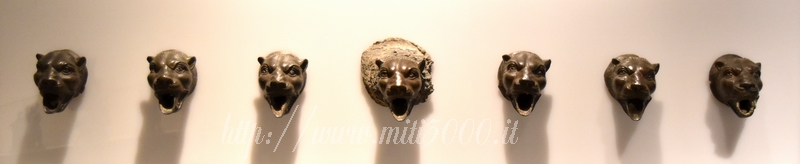
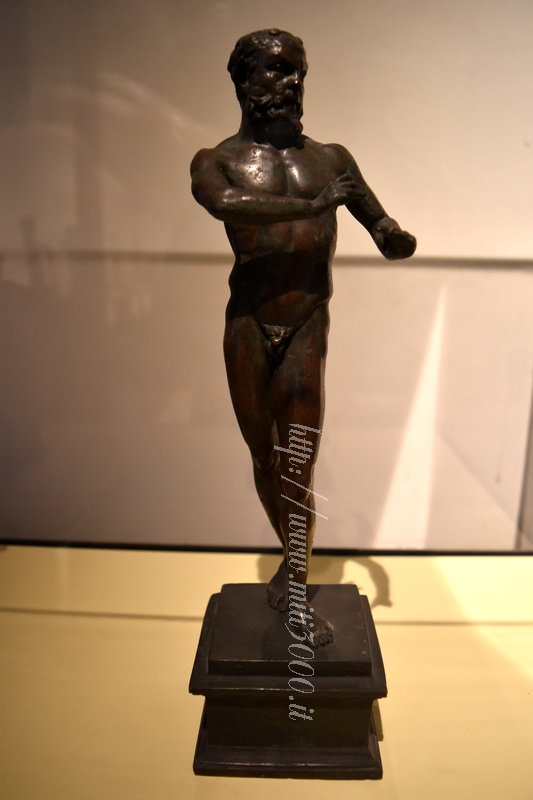
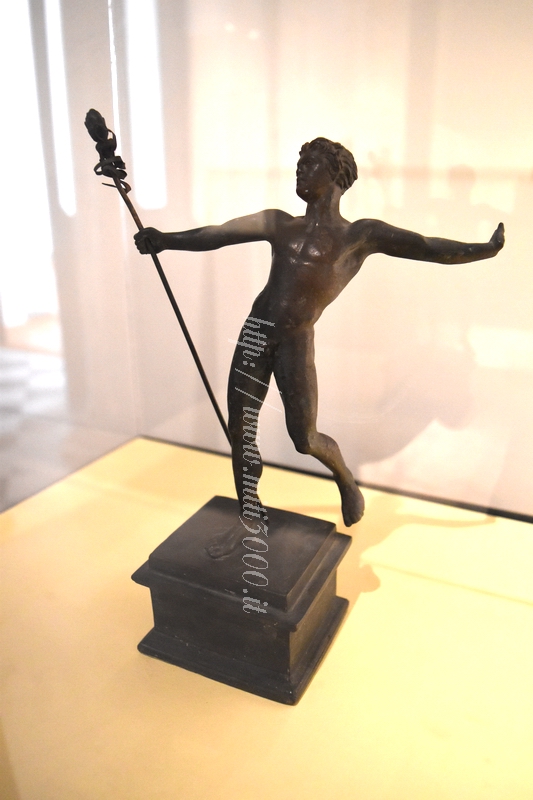
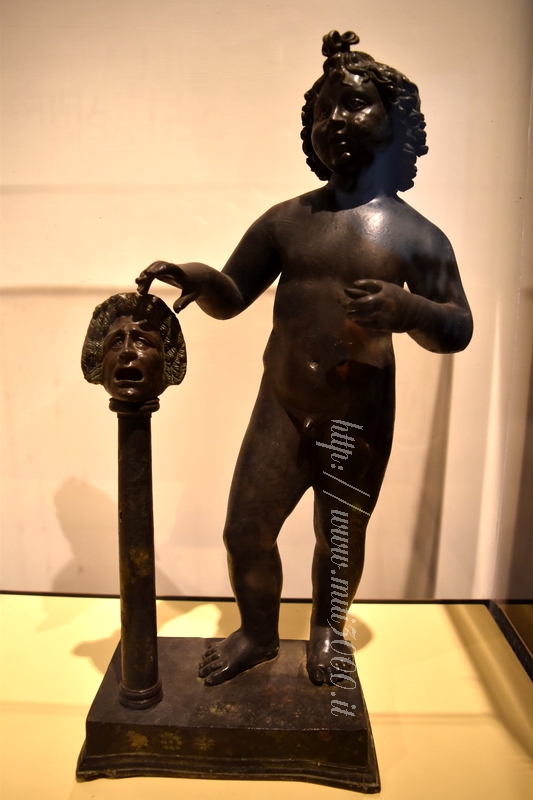
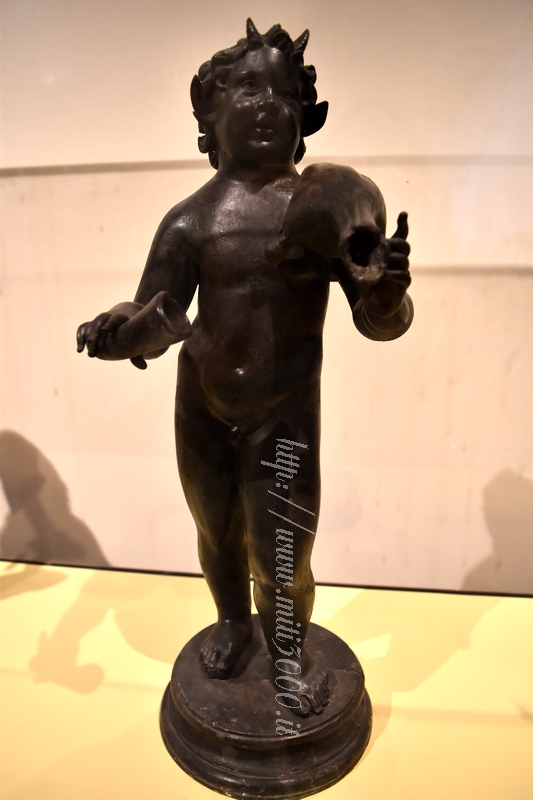
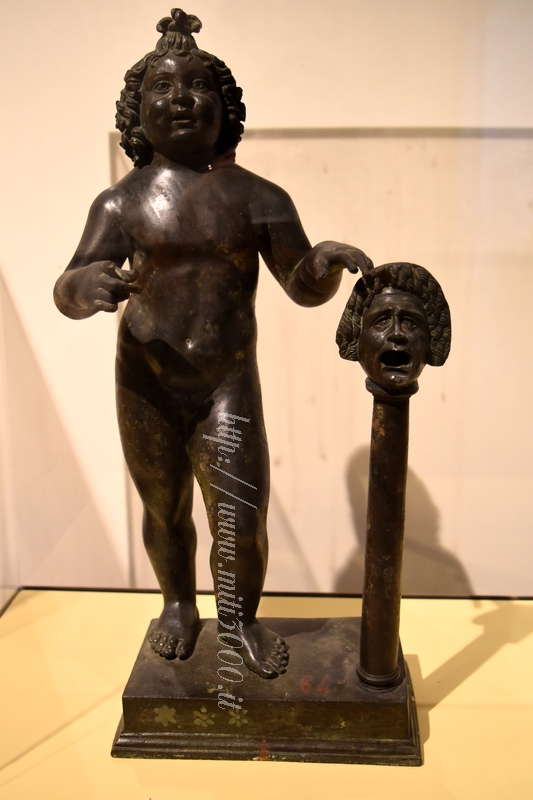
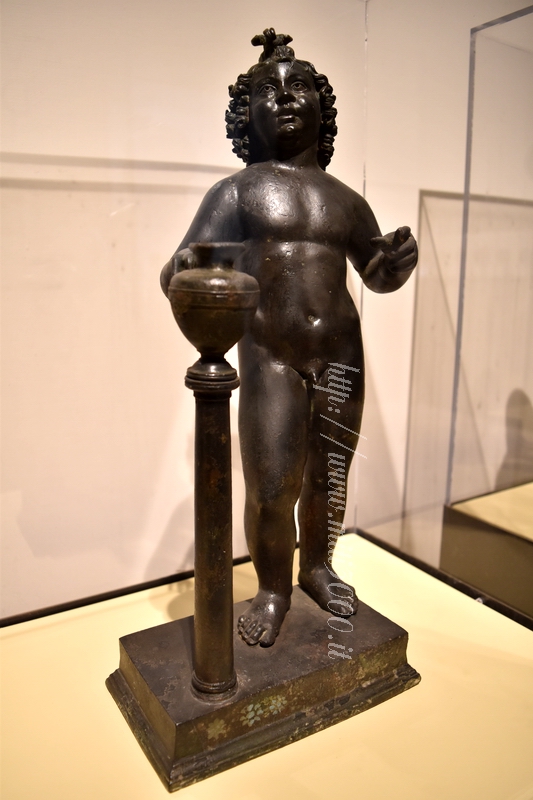
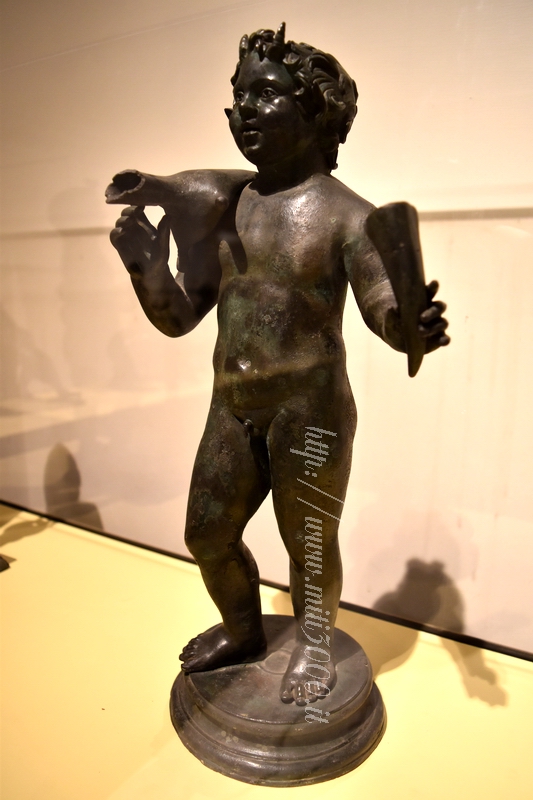
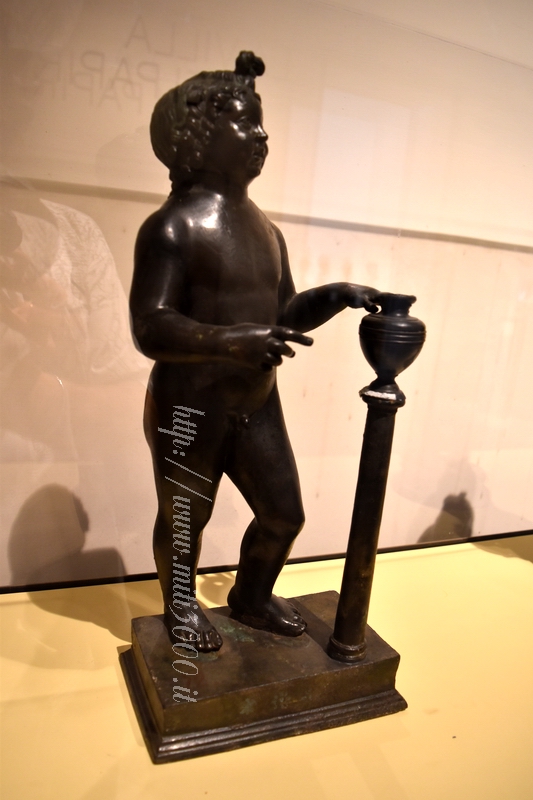
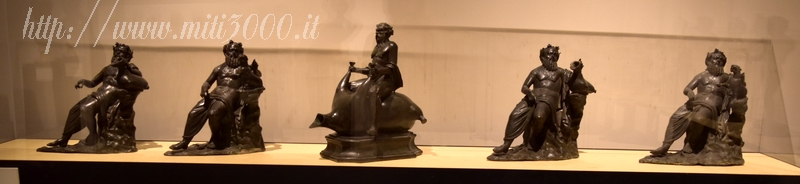
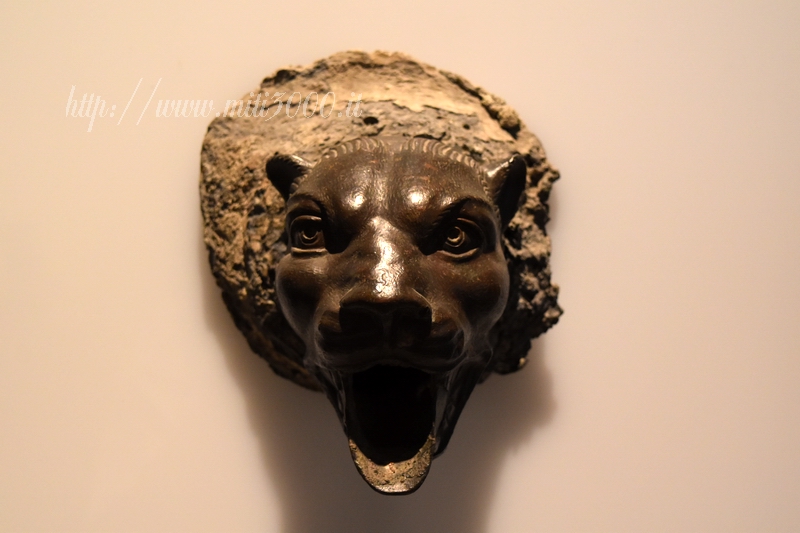
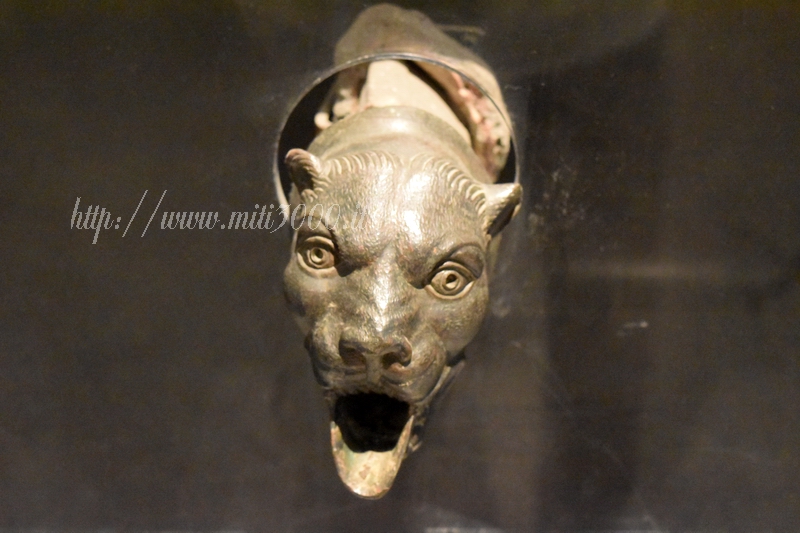
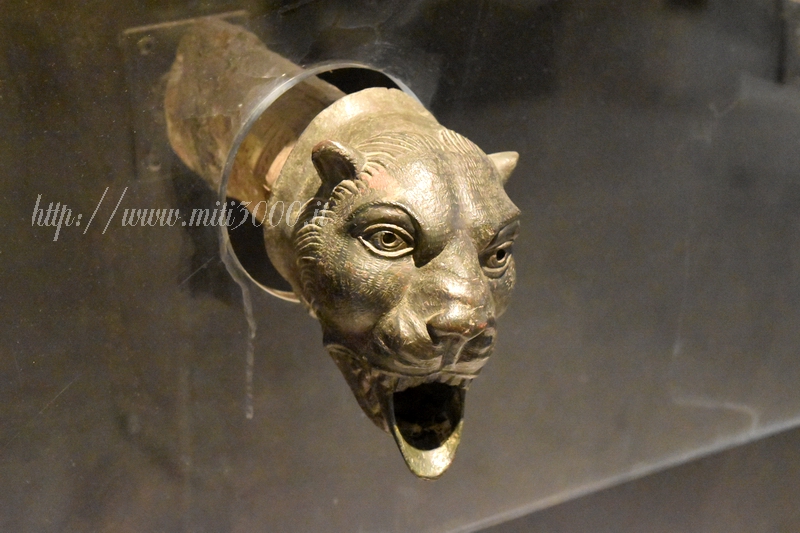
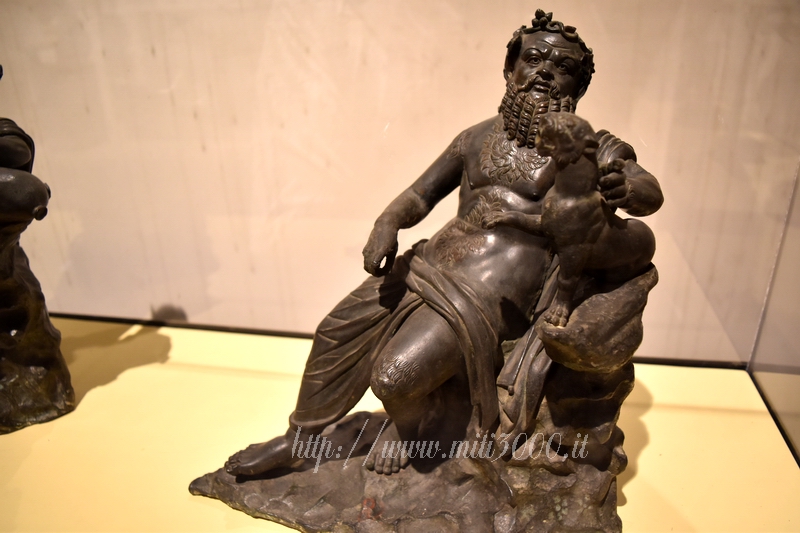
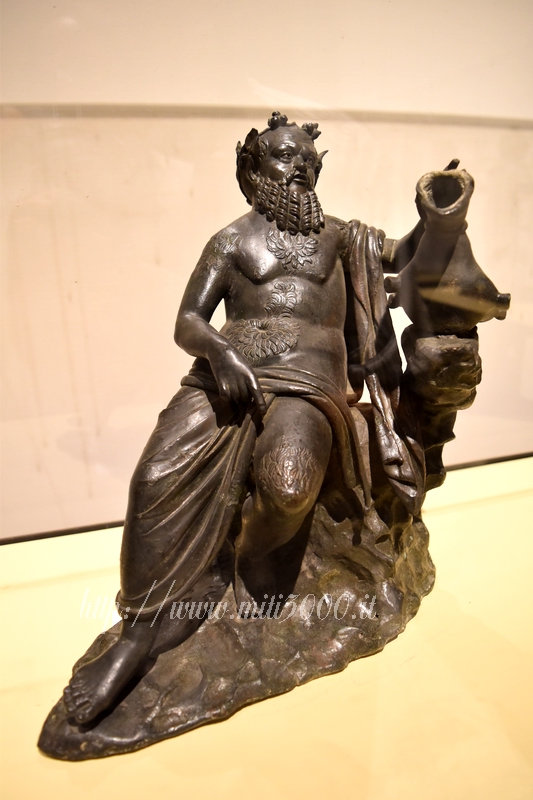
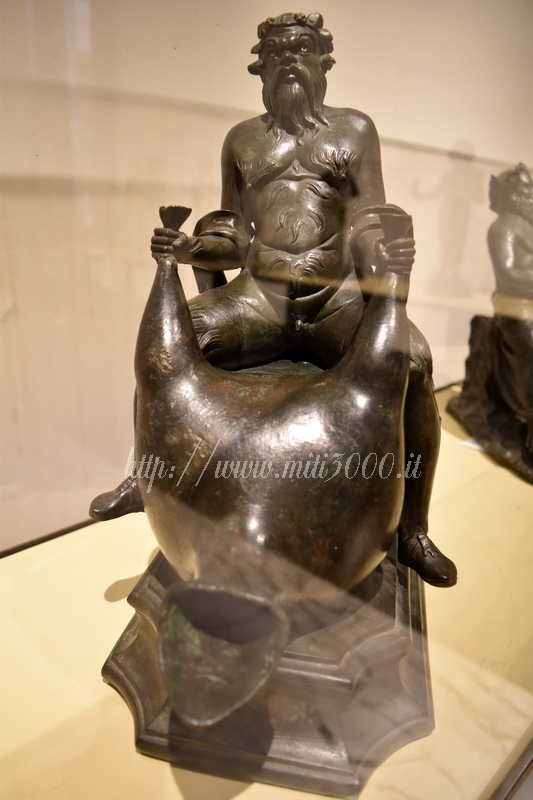
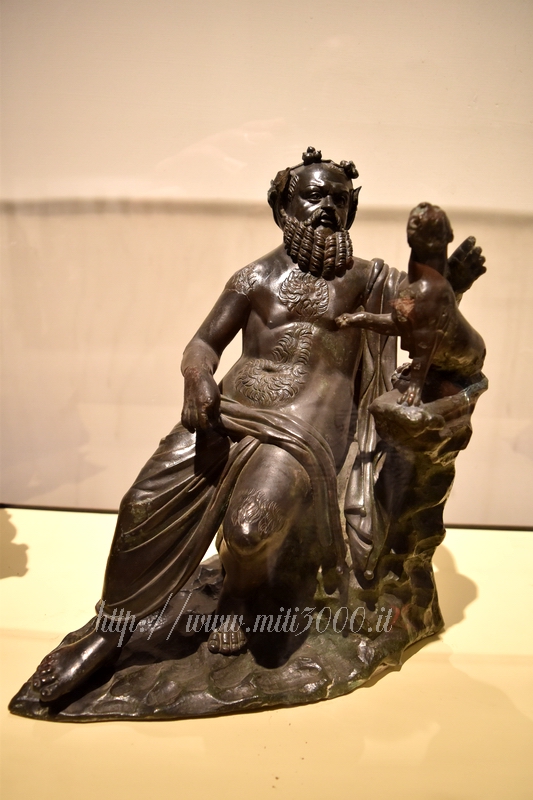
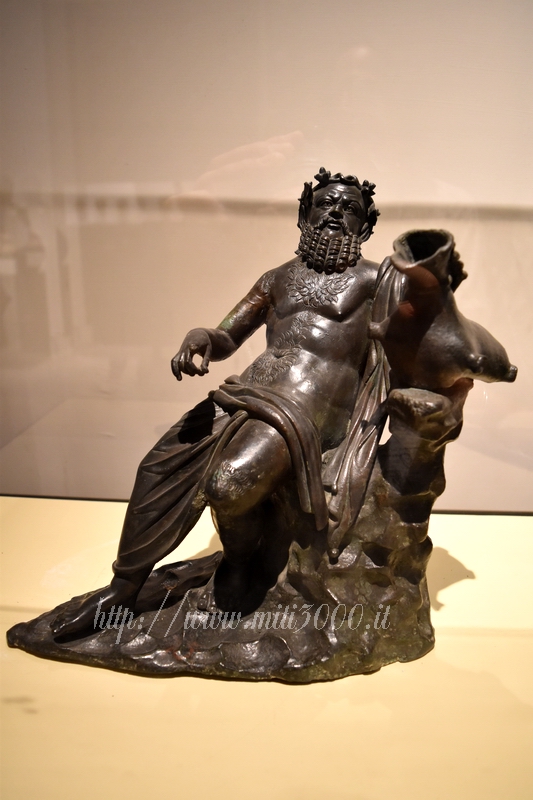
Dalla decorazione dell'impluvium, posto al centro del pavimento e rivestito di marmo, provengono numerose statuette bronzee, raffiguranti satiri, sileni. amorini, tutti personaggi del corteggio dionisiaco. Al mondo dionisiaco alludevano anche le protomi di tigre che decoravano una vasca in piombo installata nella parete nord-occidentale dell'atrio e due statuette raffiguranti anch'esse satiri.
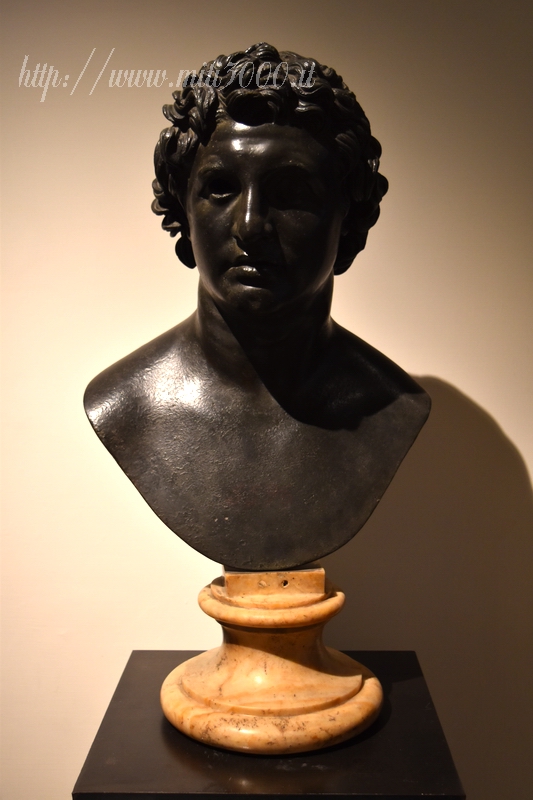
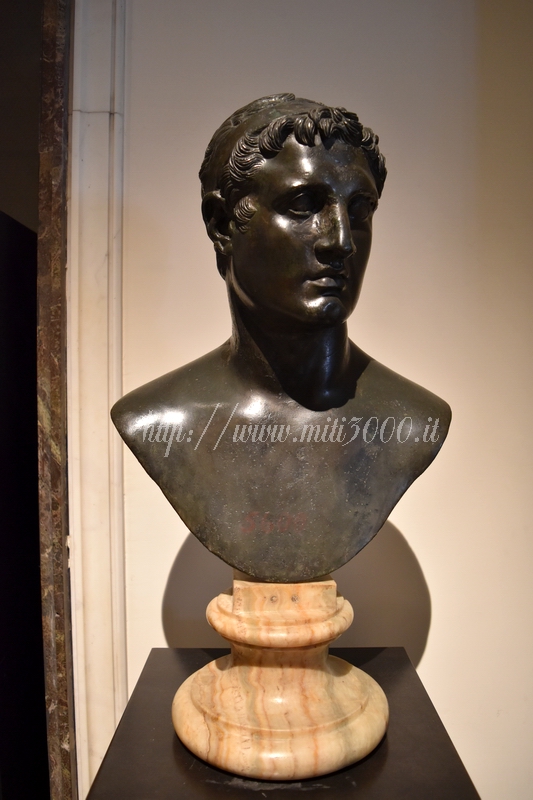
Lungo le pareti alcune nicchie accoglievano busti-ritratto di sovrani ellenistici, di dimensioni leggermente maggiori del vero.
The Atrium
The Tuscan-style atrium was enclosed within a portico which overlooked the sweeping gulf of Neapolis, and was paved with a tessellated black mosaic enlivened by chips of marble and stone.
A large number of bronze statuettes depicting satyrs.
silens and cupids, all characters who participated in the Dionysian procession, decorated the marble-paneled impluvium at the center of the paved floor.
The tiger-faced decorations on the lead basin installed in the northwest wall of the atrium and the two statuettes representing satyrs are typical of the cult of Dionysus. The walls had niches containing portrait busts, slightly larger than life sized, of Hellenistic sovereigns.
Fotografie di Giorgio Manusakis