Il Lato Est: Il Trionfo degli Olimpi
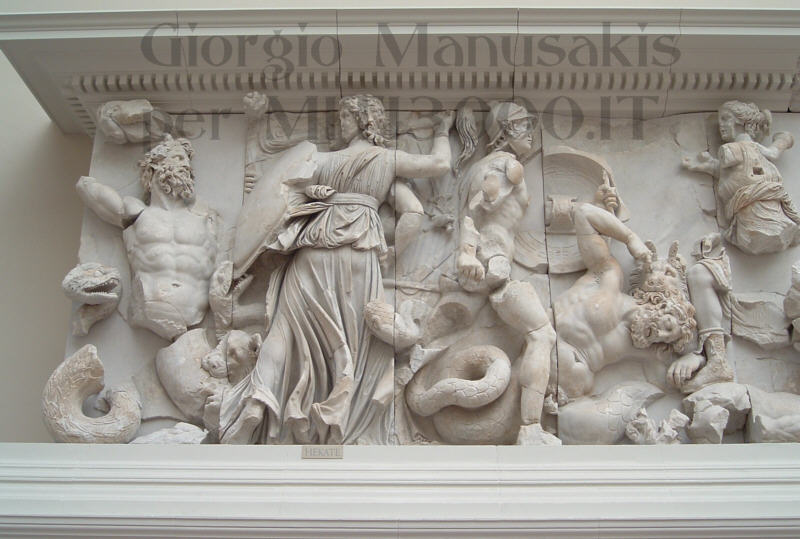
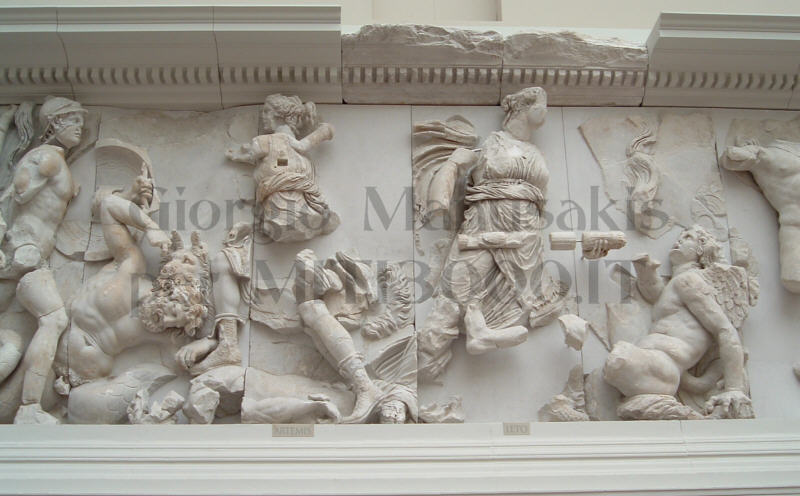
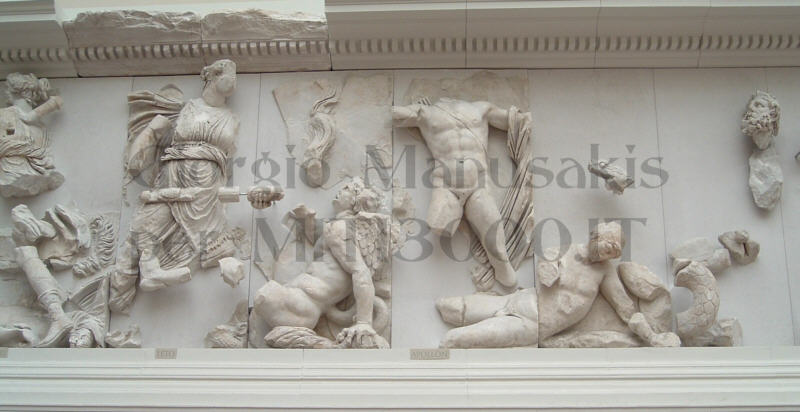
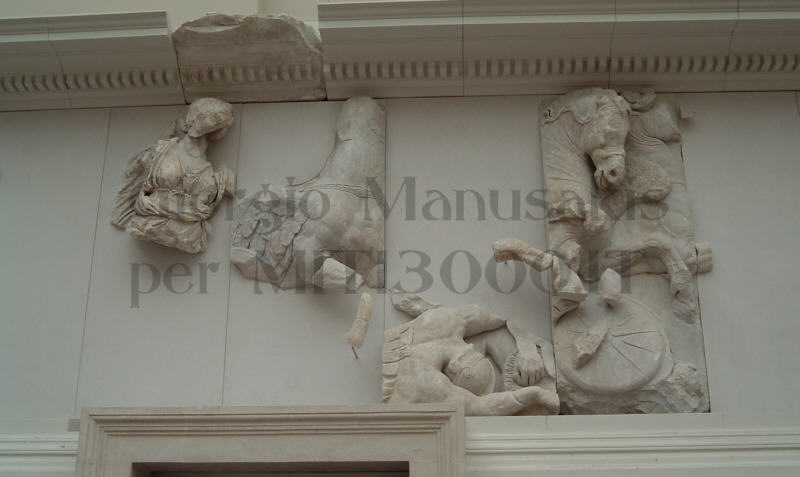
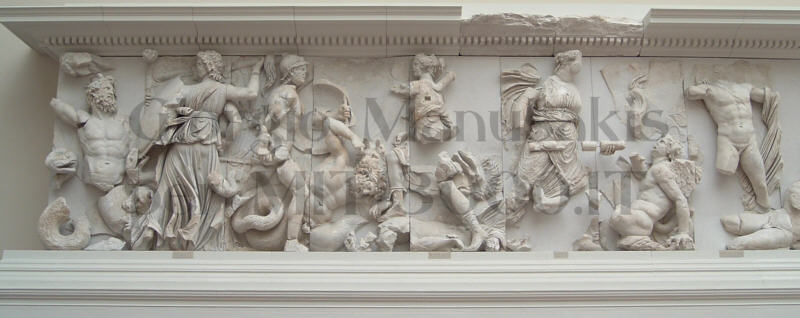
Il Fregio Orientale è il settore più importante e meglio conservato dell'intero monumento, poiché ospita le divinità principali del pantheon greco: Zeus e Atena. Qui, la Gigantomachia non è solo una mischia furiosa, ma una coreografia di potere divino assoluto.
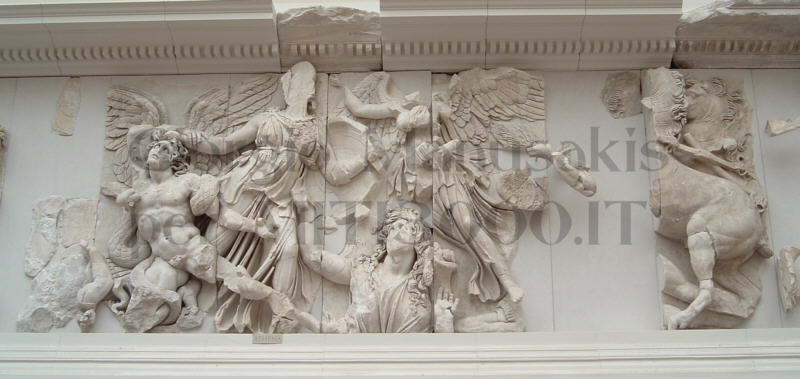
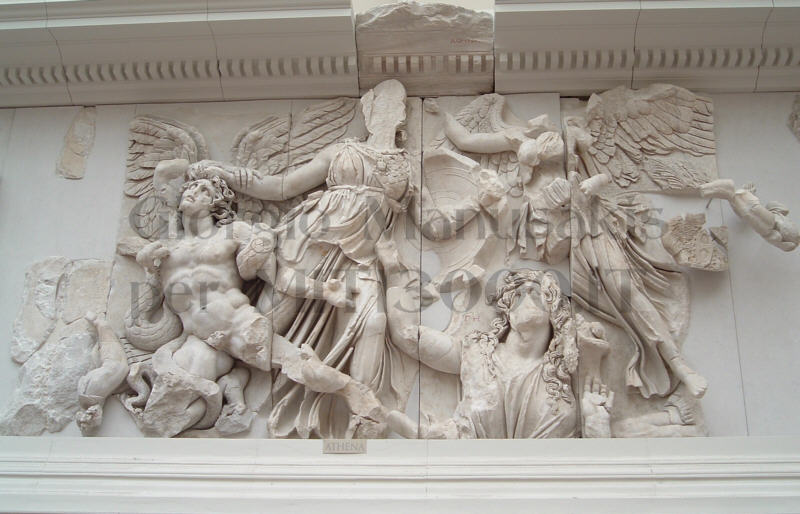
Al centro della composizione domina Zeus, il re degli dei, impegnato in uno scontro simultaneo contro tre Giganti. La sua figura emana una forza sovrumana: con il petto nudo e i muscoli in tensione, scaglia folgori devastanti mentre la sua aquila partecipa all'assalto. Accanto a lui, la scena più celebre del fregio ritrae Atena, la dea della sapienza e della guerra strategica. Con un gesto imperioso, la dea afferra per i capelli il giovane gigante Alcioneo, sollevandolo da terra per recidere il suo legame vitale con la madre.
Ai piedi di Atena emerge dalle profondità della terra Gea (la Madre Terra), con uno sguardo di straziante supplica, implorando invano la grazia per i propri figli. A completare il quadro interviene Nike, la Vittoria alata, che vola verso Atena per incoronarla, sancendo il destino ineluttabile della battaglia.
Tecnicamente, il lato Est è l'apice del pathos ellenistico. L'altorilievo è così profondo che le figure sembrano staccarsi dal fondo, quasi a voler invadere lo spazio dello spettatore. Ogni dettaglio — dalle piume delle ali di Nike alle squame dei giganti serpentiformi fino alle rughe di dolore sul volto di Gea — è reso con un virtuosismo che trasforma il marmo in carne e sofferenza.
The Eastern Side: The Triumph of the Olympians
The Eastern Frieze is the most significant and best-preserved section of the entire monument, featuring the primary deities of the Greek pantheon: Zeus and Athena. Here, the Gigantomachy is not merely a frantic brawl, but a choreographed display of absolute divine power.
At the heart of the composition stands Zeus, King of the Gods, engaged in a simultaneous struggle against three Giants. His figure radiates superhuman strength; with a bare chest and strained muscles, he hurls devastating thunderbolts while his eagle joins the assault. Beside him, the most famous scene of the frieze depicts Athena, the goddess of wisdom and strategic warfare. With an imperious gesture, she seizes the young giant Alcyoneus by the hair, lifting him off the ground to sever his vital connection to his mother.
At Athena’s feet, Gaia (Mother Earth) emerges from the depths, her face a mask of agonizing plea as she begs in vain for mercy for her children. To complete the scene, Nike, winged Victory, flies toward Athena to crown her, sealing the inevitable fate of the battle.
Technically, the Eastern side represents the peak of Hellenistic pathos. The high relief is so deep that the figures appear to break away from the background, almost invading the viewer's space. Every detail—from the feathers of Nike’s wings to the scales of the serpentine giants and the furrows of sorrow on Gaia’s face—is rendered with a virtuosity that transforms marble into flesh and suffering.