Il Fregio Meridionale dell’Altare di Pergamo: Le Divinità della Luce
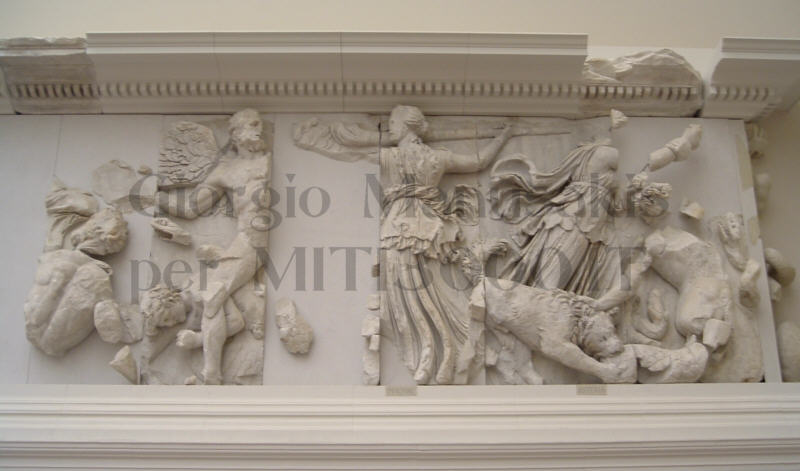
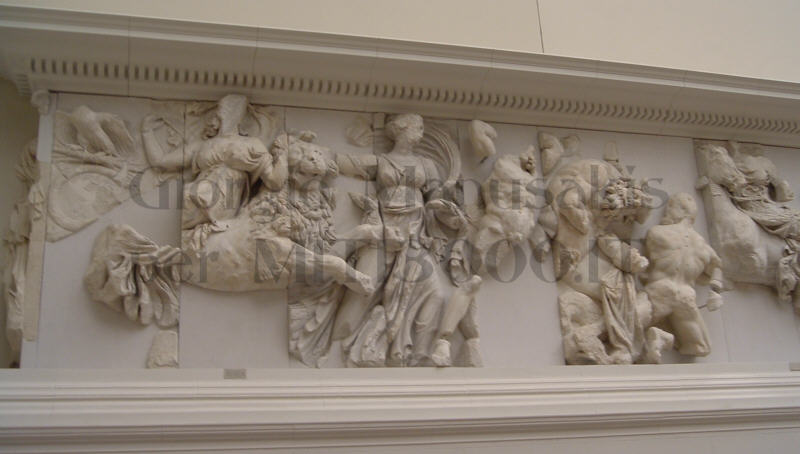
Se il lato est celebra gli Olimpici e il lato ovest le forze del mare, il lato Sud dell'Altare di Pergamo è un’esplosione di dinamismo dedicata alle divinità della luce e del tempo ciclico. Qui, la Gigantomachia viene trasfigurata in un evento cosmico: non è solo una battaglia fisica, ma il trionfo del giorno e degli astri che squarciano le tenebre del caos primordiale.
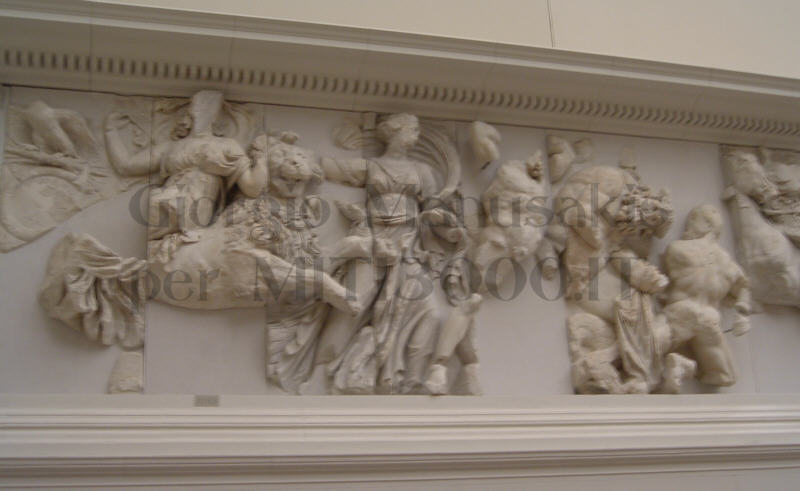
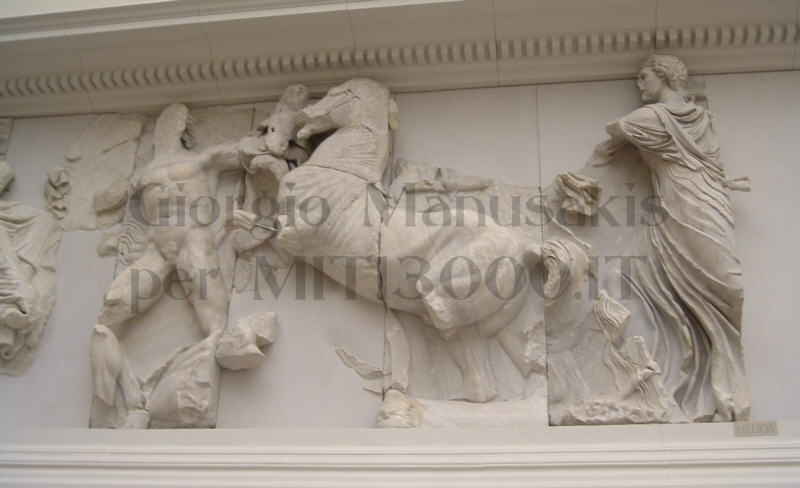
Il fulcro narrativo è dominato dalla famiglia dei Titani "luminosi". Spicca la figura di Rea (o Cibele), la Grande Madre, che irrompe nella mischia cavalcando un leone ruggente; con un gesto di sovrana potenza, scaglia le sue frecce contro un gigante, mentre la fiera affonda i suoi artigli nella carne dell'avversario. Accanto a lei, il ciclo solare è rappresentato con una maestosità senza pari: Helios, il Sole, emerge dall'abisso sul suo carro trainato da una quadriga di destrieri scalpitanti, simboleggiando l'alba della vittoria divina.
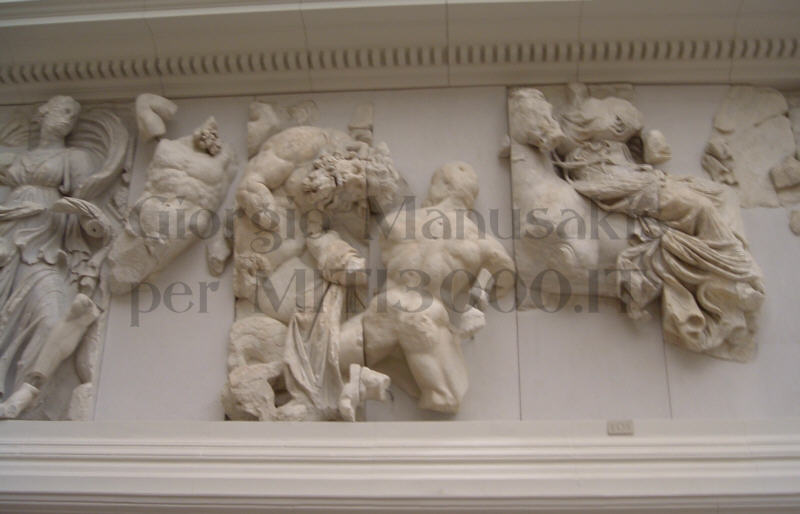
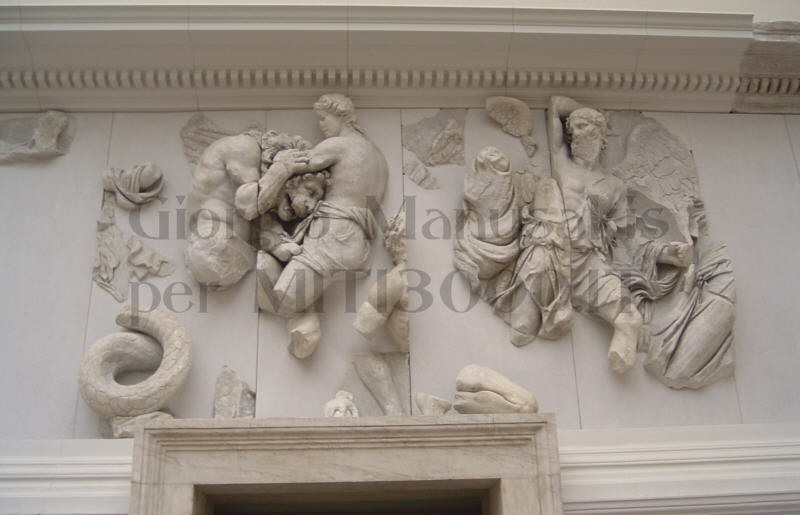
Il movimento prosegue con le sorelle di Helios: Eos, l'Aurora, che cavalca verso il centro della battaglia annunciando la fine della notte, e Selene, la Luna, che avanza sul suo destriero voltando le spalle all'osservatore, in una delle pose più eleganti e plastiche dell'intero monumento. Altre figure come Febe e sua figlia Asteria (divinità stellari) completano questa schiera celestiale, accerchiando giganti dalle muscolature compresse e dai volti stravolti dal terrore.
Tecnicamente, il lato Sud è un trionfo del "barocco pergamenico". L'uso magistrale del trapano crea ombre profonde nelle criniere dei leoni e nei panneggi bagnati delle dee, che sembrano quasi aderire ai corpi in movimento. La profondità dell'altorilievo e la torsione estrema dei busti (il celebre pathos ellenistico) rendono la scena quasi cinematografica, dove ogni figura sembra sul punto di uscire dal marmo per invadere lo spazio reale.
Sotto il profilo allegorico, questo lato enfatizza l'ineluttabilità della vittoria: come il sole sorge ogni giorno scacciando l'oscurità, così la dinastia degli Attalidi si presenta come la luce della civiltà che ha dissipato la minaccia "oscura" dei barbari Galati, portando un nuovo ordine nel mondo ellenistico.
The Southern Frieze of the Pergamon Altar: The Deities of Light.
While the eastern side celebrates the Olympians and the western side the forces of the sea, the Southern Side of the Pergamon Altar is an explosion of dynamism dedicated to the deities of light and cyclical time. Here, the Gigantomachy is transformed into a cosmic event: it is not merely a physical battle, but the triumph of day and the celestial bodies as they pierce the darkness of primordial chaos.
The narrative focus is dominated by the family of the "luminous" Titans. The figure of Rhea (or Cybele), the Great Mother, stands out as she charges into the fray riding a roaring lion; with a gesture of sovereign power, she looses her arrows at a giant while the beast sinks its claws into the enemy's flesh. Beside her, the solar cycle is depicted with unparalleled majesty: Helios, the Sun, emerges from the abyss on his chariot drawn by a four-horse team (quadriga) of rearing steeds, symbolizing the dawn of divine victory.
The movement continues with the sisters of Helios: Eos, the Dawn, riding toward the center of the battle to announce the end of the night, and Selene, the Moon, advancing on her steed with her back to the viewer in one of the most elegant and plastic poses of the entire monument. Other figures such as Phoebe and her daughter Asteria (stellar deities) complete this celestial host, cornering giants with compressed musculature and faces distorted by terror.
Technically, the Southern side is a triumph of "Pergamene Baroque." The masterful use of the drill creates deep shadows in the lions' manes and the "wet" drapery of the goddesses, which seems to cling to their moving bodies. The depth of the high relief and the extreme torsion of the torsos (the famous Hellenistic pathos) make the scene almost cinematic, where every figure appears on the verge of stepping out of the marble to invade the real space.
From an allegorical perspective, this side emphasizes the inevitability of victory: just as the sun rises every day to dispel the darkness, the Attalid dynasty presents itself as the light of civilization that has dissipated the "dark" threat of the Galatian barbarians, bringing a new order to the Hellenistic world.