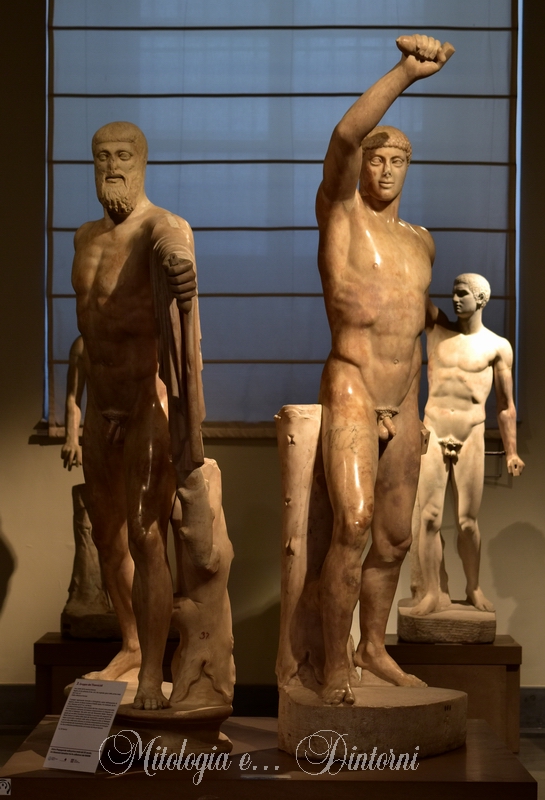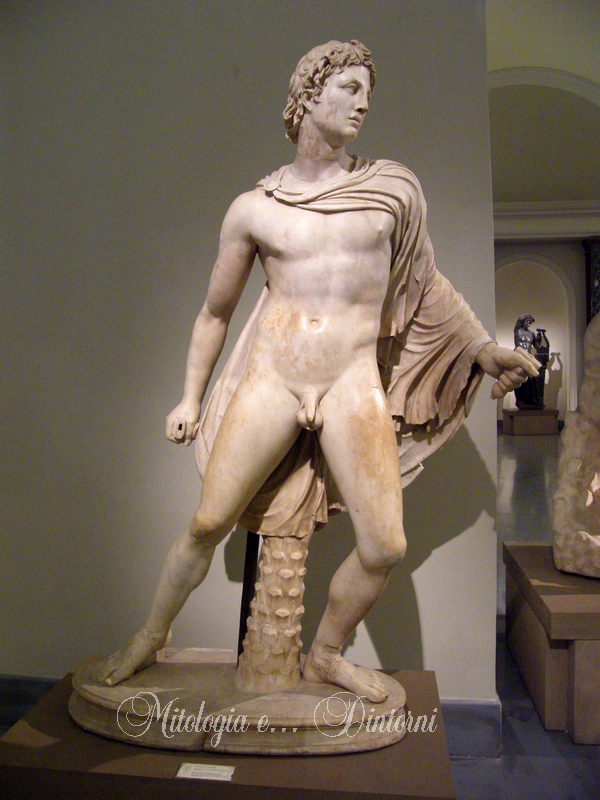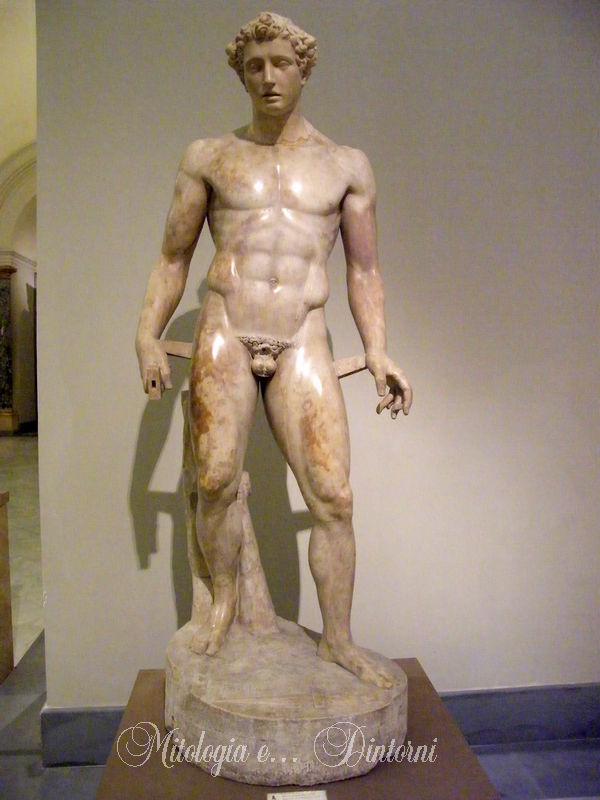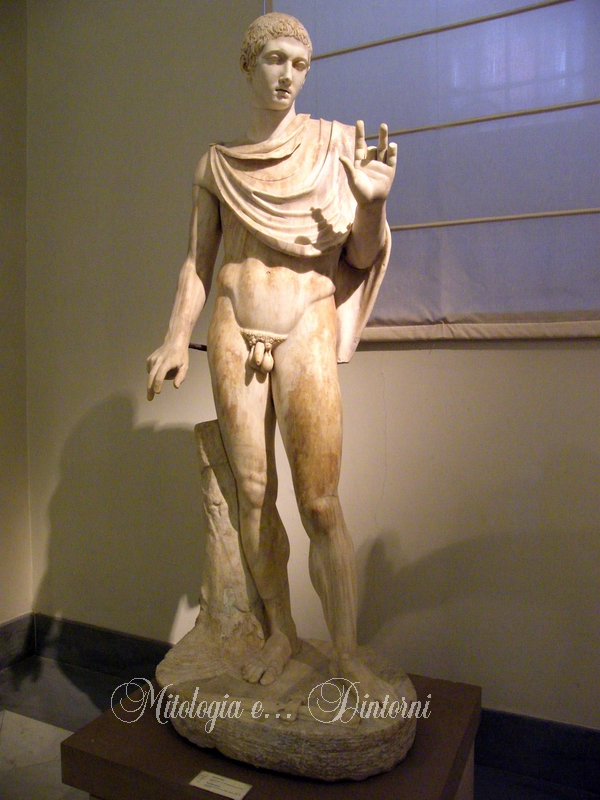

Tirannicidi - inv. 6009 Armodio - inv. 6010 Aristogitone
Copia romana, II sec. d.C., da un originale greco del primo periodo classico.
Queste due statue furono lasciate in eredità alla Collezione Farnese da Margherita d'Austria, seconda moglie di Ottavio Farnese (1587) e collocate nel Gran Salone del Palazzo Farnese a Campo dei Fiori. Rimasero qui fino a quando la collezione non fu trasferita a Napoli.
Il famoso gruppo dei Tirannicidi raffigura Armodio e Aristogitone che nel 514 a.C., spinti da un odio personale, uccisero Ipparco, fratello minore di Pisistrato, tiranno di Atene. Il governo democratico che prese il posto della tirannia abolita onorò la memoria di questi due aristocratici (indebitamente celebrati come campioni di libertà) con la dedicazione di due statue in bronzo nell'agora.
Le statue, opera di Antenore, furono rubate dai Persiani durante il sacco di Atene nel 480 a.C. Circa 150 anni dopo, Alessandro Magno o uno dei suoi successori riportò le statue dalla Persia e le ricollocò nell'Agorà. Nel frattempo, un nuovo gruppo bronzeo di Crizio e Nesiote (477/476 a.C.) aveva preso il loro posto. Sebbene fedeli allo schema iconografico del gruppo precedente, gli scultori realizzarono un'opera più in sintonia con il mutato gusto artistico del tempo, espresso nel cosiddetto Stile Severo.
Armodio sbarbato e Aristogitone barbato sono raffigurati nell'atto di attaccare il tiranno. Le numerose copie dell'opera realizzate in epoca romana testimoniano il dinamismo delle figure, animate da un'accresciuta tensione psicologica. Le copie napoletane sono particolarmente eccezionali e possono essere datate su basi stilistiche al periodo adrianeo (117-136 d.C.). La convinzione che le due statue provengano dalla villa dell'imperatore Adriano a Tivoli è dubbia, ma furono indubbiamente rinvenute insieme e costituiscono quindi l'unica copia completa del gruppo.
La testa dell'Aristogitone di Napoli è un calco in gesso, tratto da una testa marmorea rinvenuta nei Musei Vaticani e riconosciuta pertinente al torso rinvenuto nel santuario di S. Omobono a Roma. Precedentemente, una testa di marmo aveva occupato il posto del calco in gesso; si tratta di una copia di epoca adrianea della statua del Meleagro generalmente attribuita a Skopas (IV sec. a.C.).
The Tyrannicides - Inv. 6009: Harmodius - Inv. 6010: Aristogiton
Roman copy, 2nd century AD, after a Greek original from the early Classical period.
These two statues were bequeathed to the Farnese Collection by Margaret of Austria, the second wife of Ottavio Farnese (1587), and placed in the Great Hall of the Palazzo Farnese at Campo dei Fiori. They remained there until the collection was transferred to Naples.
The famous group of the Tyrannicides depicts Harmodius and Aristogiton who, in 514 BC, driven by personal hatred, killed Hipparchus, the younger brother of Pisistratus, the tyrant of Athens. The democratic government that replaced the abolished tyranny honored the memory of these two aristocrats (unduly celebrated as champions of liberty) by dedicating two bronze statues in the Agora.
The original statues, created by Antenor, were stolen by the Persians during the sack of Athens in 480 BC. About 150 years later, Alexander the Great or one of his successors returned the statues from Persia and replaced them in the Agora. In the meantime, a new bronze group by Kritios and Nesiotes (477/476 BC) had taken their place. While faithful to the iconographic scheme of the previous group, the sculptors created a work more in tune with the changed artistic taste of the time, expressed in the so-called Severe Style.
The clean-shaven Harmodius and the bearded Aristogiton are depicted in the act of attacking the tyrant. The numerous copies of the work made in the Roman era testify to the dynamism of the figures, animated by an increased psychological tension. The Naples copies are particularly exceptional and can be dated on stylistic grounds to the Hadrianic period (117-136 AD). The belief that the two statues come from Emperor Hadrian's Villa at Tivoli is doubtful, but they were undoubtedly found together and thus constitute the only complete copy of the group.
The head of the Naples Aristogiton is a plaster cast, taken from a marble head found in the Vatican Museums and recognized as belonging to the torso found in the sanctuary of S. Omobono in Rome. Previously, a marble head had occupied the place of the plaster cast; it was a Hadrianic-period copy of the statue of Meleager, generally attributed to Skopas (4th century BC).